

Blog
Signature Lawn and Landscape LLC
What Are the 2026 Best Landscaping Yard Maintenance Tools?
Choosing the right tools can turn a Saturday of tangled hedges, compacted soil, and aching hands into a more manageable routine. The U.S. Bureau of Labor Statistics reports that grounds maintenance workers held about 1.3 million jobs in 2023, underscoring the scale of work these tools support. Its Occupational Outlook Handbook also describes equipment such as mowers, trimmers, and leaf blowers as everyday parts of the job. For homeowners, the same tools need to fit the yard, the task, and the person using them.
The National Association of Landscape Professionals’ industry research offers another useful lens: landscaping is a substantial, professionalized field, not just a weekend hobby. Yet no report can choose a tool for a sloped lawn or a narrow bed. As landscape architect Thomas Rainer writes, “A garden is not a place, it’s a process.” That idea matters here: maintenance needs change with seasons, plants, and site conditions. Some tools earn their space. Others do not.
This guide to Landscaping Yard Maintenance compares practical options for mowing, pruning, edging, and cleanup. It considers handling, power, durability, and upkeep—not just advertised features. A small caveat: the “best” tool is rarely universal. A quiet battery trimmer may suit a compact yard, while a large property may demand longer runtime. Choose for your real workload. Mark the muddy path, notice the tight corners, and start there.
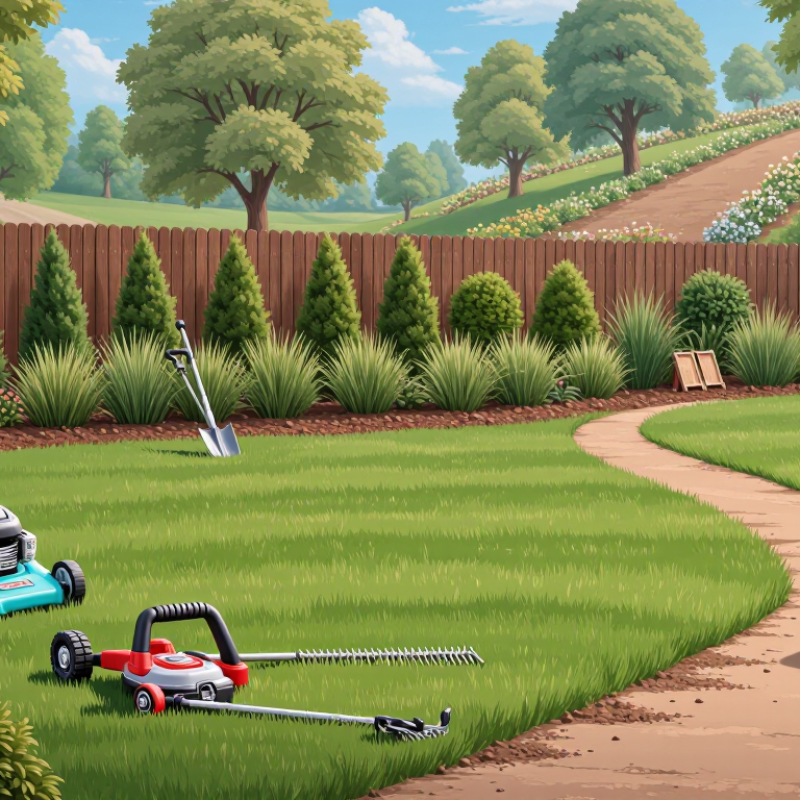
What Landscaping and Yard Maintenance Tools Are Used For
Landscaping and yard maintenance tools help keep grass, beds, trees, and paths healthy and manageable. A mower cuts grass evenly, while a string trimmer reaches around fence posts and beneath benches. An edging tool shapes the boundary between lawn and walkway. Small details matter. A rake gathers wet leaves and loose clippings, while a leaf blower clears debris from steps and narrow corners. Choose tools that suit the size of the yard; a heavy machine can be awkward in a compact space.
Pruning shears cut thin stems and remove dead growth from shrubs. Loppers provide extra leverage for thicker branches, and a hand saw handles larger limbs that need careful removal. For planting, a spade turns soil and slices through roots, while a hand trowel makes small holes for seedlings. A wheelbarrow moves compost, mulch, or pulled weeds without repeated trips. Still, digging too close to a tree’s trunk can damage roots, so work slowly and check what lies beneath the surface.
Watering tools deliver moisture where plants need it. A hose with an adjustable nozzle suits general watering, while a watering can gives better control around delicate seedlings. In larger gardens, a sprinkler can cover broad areas, but it may waste water on paths or pavement. Gloves protect hands from thorns and rough stems, and eye protection is sensible when trimming or clearing debris. A tidy edge looks satisfying, but not every corner needs to be perfect; rushing can harm plants or leave uneven cuts.
How to Evaluate the Best Yard Tools for 2026
Evaluating the best yard tools for 2026 starts with matching each tool to the work, not its feature list. Measure the lawn, note slopes and narrow gates, and identify recurring tasks such as edging, pruning, or clearing wet leaves. Then compare cutting performance, weight, noise, maintenance needs, and repair options. Fit matters. A heavy trimmer may feel manageable in a shop but tiring after twenty minutes along a long fence.
Water management deserves a place in the comparison. The U.S. EPA’s WaterSense guidance says as much as 50% of outdoor water use can be wasted through inefficient irrigation. A hose-end timer or soil-moisture sensor may therefore matter more than a larger sprinkler. Check whether controls are easy to set and whether water reaches beds without soaking paths. Small details count.
For powered tools, consider noise at the operator’s position, not just advertised sound levels. NIOSH recommends limiting occupational noise exposure to 85 dBA over an eight-hour workday. That benchmark is not a guarantee of comfort, especially in enclosed yards. Compare measured noise, vibration, runtime, and charging time under realistic conditions. A useful test is trimming one full edge or clearing a small, leaf-covered section. One imperfect measure remains: durability is hard to judge before a season of use. Keep receipts and record repairs.
Top Tool Types for Lawn Care, Trimming, and Cleanup
For most lawns, the best maintenance tools are the ones matched to the size and shape of the yard. A mower with adjustable cutting height helps prevent scalping, especially on uneven ground. Small, level lawns may suit a manual reel mower; larger areas often need a powered mower with a comfortable handle and easy-to-check blade. Keep the blade sharp. Dull blades can tear grass and leave ragged, pale tips.
A string trimmer tidies grass around fences, tree trunks, and garden beds where a mower cannot reach. For crisp borders, a half-moon edger or flat spade offers control without another motor. Hedge shears work well for light shaping, while powered trimmers save effort on long hedges. Choose pruning loppers for thicker stems, and avoid stretching from a ladder to reach high growth. That shortcut can go wrong.
Cleanup tools matter, too. A fan rake gathers leaves without scraping up much lawn, while a sturdy tarp makes hauling branches easier. A leaf blower can speed work on driveways, but a rake is quieter and gives more control near planting beds. Wear eye protection and gloves when trimming or clearing debris. Check blades, handles, and battery charge before starting; small checks are easy to skip, and I still find that a rushed start often costs time later.
What Are the 2026 Best Landscaping Yard Maintenance Tools? - Top Tool Types for Lawn Care, Trimming, and Cleanup
This practical guide compares common tool types by task, power source, upkeep, and safety considerations. The best choice depends on yard size, terrain, vegetation, and how often the tool will be used.
| Tool Type | Best For | Common Options | Key Advantages | Routine Care | Safety Considerations |
|---|---|---|---|---|---|
| Lawn mower | Cutting grass across open lawn areas | Push, self-propelled, riding, corded electric, battery-powered, or gasoline-powered | Provides an even cut; a suitable deck width can reduce mowing time on larger lawns. | Keep the blade sharp and balanced; clear grass from the underside only when the mower is switched off and secured. | Wear sturdy footwear and eye protection; keep people clear of the discharge area and follow the manual for blade servicing. |
| String trimmer | Edging and cutting grass around trees, fences, and other obstacles | Battery-powered, corded electric, or gasoline-powered | Reaches areas a mower cannot; lightweight models can be convenient for smaller yards. | Use the correct line size, replace worn line, and clean grass and debris from the guard and cutting head. | Wear eye protection and long trousers; keep bystanders away because the line can throw stones and other debris. |
| Hedge trimmer | Shaping and maintaining hedges and shrubs | Hand-operated, battery-powered, corded electric, or gasoline-powered | Reciprocating blades can trim a hedge more quickly than hand shears over longer sections. | Clean and inspect blades after use; keep them sharp and lubricated as directed by the manufacturer. | Use eye protection and gloves; keep both hands on the tool and avoid cutting near hidden wires or branches under tension. |
| Leaf blower | Moving leaves and loose debris from lawns, paths, and driveways | Battery-powered, corded electric, or gasoline-powered | Can clear broad, hard surfaces quickly; battery models avoid a power cord during use. | Clear air intakes; check the battery or power cord before use and follow the manual for engine maintenance where applicable. | Wear hearing and eye protection; avoid directing airflow toward people, animals, roadways, or dust-sensitive areas. |
| Pruning shears and loppers | Pruning small stems and branches within reach | Hand-powered bypass or anvil shears; longer-handled loppers for thicker branches | Quiet, precise, and easy to control for targeted plant maintenance; requires no fuel or charging. | Wipe blades clean, keep them sharp, and disinfect between plants when disease transmission is a concern. | Use a tool rated for the branch size; keep fingers clear of the blades and do not cut branches overhead. |
| Rake | Gathering leaves, grass clippings, and light garden debris | Leaf rake for loose material; garden rake for soil and heavier debris | Simple, quiet, and useful for cleanup in areas where powered equipment is unnecessary. | Remove debris from the tines and store the rake where it will not create a tripping hazard. | Use a comfortable stance and avoid twisting repeatedly; keep the rake head pointed down when carrying it. |
| Broadcast or drop spreader | Applying lawn seed, fertilizer, or other labeled granular products | Handheld, push, or tow-behind models | Helps distribute material more evenly than hand scattering when the setting and walking pace are consistent. | Empty and clean the hopper after use; check that the gate and moving parts are clear before storage. | Follow the product label, avoid applying materials near drains or waterways, and wear the protective equipment specified on the label. |
| Garden hose with adjustable nozzle | Watering garden beds, containers, and lawn areas | Expandable or standard hose with a shutoff or adjustable spray nozzle | Offers flexible watering without requiring a powered tool; a shutoff nozzle helps control water flow. | Drain before freezing weather, check for leaks, and store out of prolonged direct sunlight when practical. | Route the hose to reduce trip hazards and use a gentle spray around delicate plants and exposed soil. |
How to Choose Tools for Different Yard Sizes and Tasks
Choosing yard tools by area and task prevents a crowded shed and tiring work. For a small courtyard, a hand pruner, compact rake, and lightweight hose may handle most jobs. A larger lawn needs a mower matched to its shape: narrow gates and planted beds favor a smaller deck, while open, level ground can suit a wider cutting path. Check storage space and your ability to lift the tool, too. The biggest model is not always the easiest one to use.
Match tools to the work, not just the square footage. Use bypass pruners for small, live stems; loppers provide more leverage on thicker branches. A stiff rake suits compacted debris, while a leaf rake moves dry leaves without scraping soil. For watering, a soaker hose or drip line can target beds more precisely than a sprinkler.
The U.S. EPA’s WaterSense program estimates outdoor use exceeds 30% of household water use nationwide and can reach 60% in dry regions. That makes irrigation choice matter. Still, a timer cannot fix a poorly placed hose or mismatched watering schedule.
Before buying, measure the gate, note slopes, and list weekly tasks. For a sloped yard, lighter equipment and secure footing may matter more than speed. Try the grip and balance in person if possible. It is easy to overestimate how much power you need. A small tool that gets used beats a heavy one left in storage.
How to Use and Maintain Landscaping Tools Safely
Landscaping tools work best when they are safe, clean, and suited to the task. Before mowing, trimming, or digging, check handles, guards, blades, cords, and battery casings for damage. Wear safety glasses, sturdy shoes, and hearing protection when noise or flying debris is possible. Tie back loose hair and keep children and pets away from the work area.
Small habits matter. I once overlooked a loose handle; now I test it before starting.
Tips: Read the tool’s instructions before use. Keep both hands on powered equipment, and never remove a jam while it is running. Switch it off and disconnect the battery or power source first. For fuel-powered tools, let the engine cool before refueling. Stop if a tool vibrates unusually or feels difficult to control.
After each job, brush away grass and soil, then dry metal parts to limit rust. Sharpen blades only as directed, using suitable protection; a dull edge can require extra force. Store tools in a dry, secure place, with sharp edges covered. Maintenance schedules vary, so check the manual rather than guessing.
I still forget to clean tools after a long day sometimes. A quick inspection before the next use helps catch problems I missed.
Related Posts
-
China Top 10 Landscaping Yard Maintenance Companies?
-
Top 10 Landscaping And Yard Maintenance Products?
-
10 Best Landscaping And Yard Maintenance Tools
-
How to Choose Landscaping and Lawn Maintenance Services?
-

How to Choose the Best Residential Lawn Maintenance Solutions for Your Needs
-
Top Landscaping and Lawn Maintenance Services 2026


Share On: