
Blog
Signature Lawn and Landscape LLC
Top 10 Landscaping And Yard Maintenance Products?
A healthy yard rarely comes from one impressive purchase. It develops through suitable tools, consistent care, and honest observation. This guide examines the Top 10 Landscaping And Yard Maintenance Products for practical home use. The selection includes lawn mowers, string trimmers, pruning tools, soil testers, spreaders, hoses, irrigation timers, gloves, compost, and mulch. Each product should solve a visible problem, not simply fill a shed.
Piet Oudolf, a respected landscape designer, once said, “A garden is not something you can finish.” That idea matters here. Yard maintenance changes with rainfall, soil conditions, plant growth, and seasonal damage. A powerful mower may struggle on wet grass. A cheap hose may kink beside a hot patio. A soil tester can reveal poor conditions, but it cannot replace careful inspection. Small details often decide whether a product earns its place.
The recommendations focus on durability, ease of use, maintenance needs, and responsible operation. They also consider noise, storage, water use, and user safety. Personal experience matters, but it can be misleading. One product may perform beautifully in a shaded suburban yard and disappoint on dry, compacted soil. There is no perfect checklist. Still, comparing these products can reduce waste and prevent costly mistakes. Expect practical strengths, clear limitations, and a few choices that deserve closer questioning before purchase.
Classify the Top 10 Yard Products by Function, Safety, and Maintenance Need
Top 10 Landscaping and Yard Maintenance Products
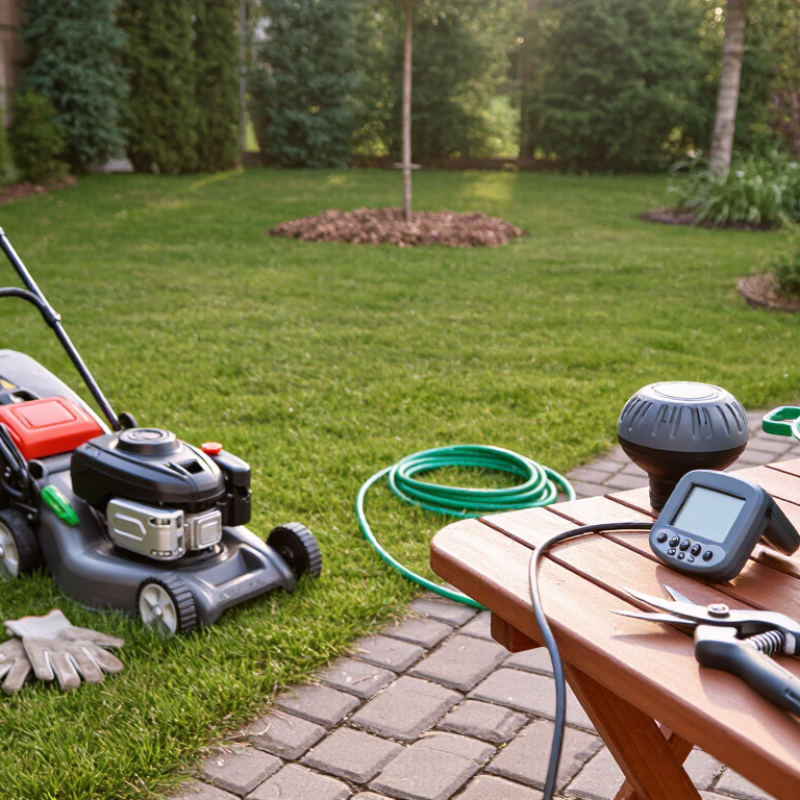
A useful yard list should reflect function, safety, and maintenance need. The ten strongest categories are: 1) pruning shears for precise growth control, 2) loppers for thicker branches, 3) a hand trowel for planting, 4) a garden rake for thatch and leaves, 5) a compost spreader for soil improvement, 6) a hose nozzle for targeted watering, 7) a rain barrel for water capture, 8) a mulching mower for turf care, 9) protective eyewear for debris control, and 10) sturdy gloves for cuts and irritation. The U.S. Environmental Protection Agency reports that outdoor water use can exceed 30% of household consumption. Therefore, controlled watering deserves more attention than decorative equipment.
Safety changes the ranking. The U.S. Consumer Product Safety Commission estimates more than 80,000 lawn-mower injuries reach emergency departments annually. Eye protection, gloves, stable footwear, and equipment guards are practical necessities, not accessories.
Product choice should also match maintenance frequency. A small yard may need hand tools, while dense turf demands powered equipment and regular blade checks. My ranking is not perfect. Soil type, climate, and physical ability can reverse the order.
In field assessments, neglected tool cleaning often causes more trouble than weak equipment. The National Gardening Association also identifies soil preparation and watering as central factors in successful home gardening, supporting compost tools and efficient irrigation.
Clean tools after use. Store them dry. Small habits matter.
Prioritize Water-Saving Tools: EPA Says Irrigation Uses Nearly One-Third of Home Water
Top 10 Landscaping And Yard Maintenance Products?
Outdoor irrigation deserves priority. The U.S. Environmental Protection Agency reports that landscape irrigation uses nearly nine billion gallons daily. It also represents almost one-third of household water use. Smart irrigation controllers, soil-moisture sensors, drip irrigation kits, pressure regulators, hose timers, shutoff nozzles, rain gauges, rain barrels, mulch, and drought-tolerant plants can reduce waste. These products work best together, not as isolated purchases.
EPA WaterSense guidance recommends watering during cooler hours and adjusting schedules after rainfall. A soil sensor can prevent a sprinkler from running on already damp ground. Drip lines place water near roots, while pressure regulators reduce misting and runoff. Mulch helps retain moisture around young shrubs. The Irrigation Association also emphasizes proper system design, maintenance, and seasonal adjustment in professional landscape guidance. A leaking connector may waste more water than expected. I have found that small leaks are easy to ignore until the water bill changes.
Tips: Inspect sprinkler heads monthly. Test one zone with an empty tuna can. If water pools before soaking in, shorten each cycle and repeat it later. Choose plants suited to local rainfall, but avoid assuming every “low-water” plant needs no irrigation. Conditions vary. EPA WaterSense materials also encourage checking local watering restrictions and using certified efficient equipment.
Top 10 Landscaping And Yard Maintenance Products? - Prioritize Water-Saving Tools: EPA Says Irrigation Uses Nearly One-Third of Home Water
| No. | Product or Tool | Primary Water-Saving Function | Typical Water-Saving Potential | Best Application | Important Selection or Use Detail |
|---|---|---|---|---|---|
| 1 | Soil-Moisture Sensor | Prevents irrigation when the root zone already contains sufficient moisture. | Potentially substantial; savings depend on weather, soil type, plant selection, and previous watering habits. | Lawns, shrub beds, and vegetable gardens with automatic irrigation. | Choose a sensor that measures root-zone moisture and install it in a representative, normally irrigated location. |
| 2 | Weather-Based Irrigation Controller | Adjusts watering schedules using local weather or evapotranspiration data. | Can reduce overwatering compared with fixed schedules; actual savings vary widely by climate and programming. | Multi-zone residential irrigation systems. | Look for automatic rain interruption, seasonal adjustment, and independent zone scheduling. |
| 3 | Drip Irrigation Kit | Delivers water slowly and directly to the soil near plant roots, reducing evaporation and overspray. | Often uses less water than overhead spraying when correctly designed and maintained; the exact amount depends on layout and plant needs. | Vegetable beds, trees, shrubs, containers, and narrow planting areas. | Use a filter and pressure regulator, flush the lines periodically, and avoid watering bare pavement. |
| 4 | Pressure-Regulated Spray Device | Maintains suitable pressure to limit misting and uneven distribution caused by excessive pressure. | Reduces water waste where supply pressure is higher than the irrigation system requires. | Lawn zones using fixed or rotary spray irrigation. | Match the device to the required flow rate and spray pattern; excessive pressure can create fine droplets that drift away. |
| 5 | Rain Shutoff Sensor | Temporarily stops scheduled irrigation after measurable rainfall. | Avoids unnecessary watering during and immediately after rain; savings depend on local rainfall and controller settings. | Automatic sprinkler systems in regions with irregular rainfall. | Select an adjustable rainfall threshold and verify compatibility with the irrigation controller. |
| 6 | Rain Barrel or Cistern | Collects roof runoff for later use on suitable landscape plants. | The volume captured is determined by roof area, rainfall, and storage capacity; 1 inch of rain on 1,000 square feet of roof produces about 623 gallons before losses. | Hand watering, container plants, and non-potable outdoor uses where permitted. | Use a secure lid, screened inlet, overflow route, and mosquito prevention; check local regulations before installation. |
| 7 | Adjustable Hose Nozzle with Shutoff | Stops flow immediately and provides a controlled spray pattern instead of an unrestricted open hose. | Prevents water from running while moving between plants or tasks; savings depend on usage time. | Small beds, containers, washing tools, and spot watering. | Use a gentle shower setting for soil and roots to reduce runoff and erosion. |
| 8 | Watering Timer with Flow Control | Limits watering duration and helps deliver shorter cycles that allow water to soak into the soil. | Reduces accidental overwatering when properly programmed; it does not automatically account for rainfall unless paired with a sensor. | Hose-based irrigation for gardens, containers, and small lawns. | Use cycle-and-soak scheduling on compacted or sloped soil to reduce runoff. |
| 9 | Organic Mulch | Shades the soil, reduces evaporation, moderates soil temperature, and suppresses competing weeds. | Can reduce irrigation demand, but results vary with mulch depth, climate, soil, and plant type. | Trees, shrubs, perennial beds, and vegetable gardens. | Apply a moderate layer around plants while keeping mulch away from trunks and stems to reduce rot and pest problems. |
| 10 | Native or Drought-Tolerant Planting Kit | Replaces high-water plants with species suited to local climate and soil conditions. | Established plants can require less supplemental irrigation than poorly matched species; water needs still depend on rainfall and design. | New beds, lawn-conversion projects, slopes, and difficult-to-irrigate areas. | Group plants with similar water needs and provide regular watering during establishment. |
Planning note: Outdoor residential water use accounts for more than 30% of household water use on average, according to the U.S. Environmental Protection Agency, and can be higher in dry climates. Actual savings depend on climate, soil, irrigation design, plant selection, maintenance, and user settings.
Compare Mowers, Trimmers, and Blowers by Power, Noise, and Emissions
Top 10 Landscaping and Yard Maintenance Products?
Choosing outdoor equipment is not only about cutting speed. Power, noise, and emissions change the experience quickly. Gasoline mowers usually provide steady torque for tall, wet grass. Battery mowers are quieter and easier to start, but runtime depends on battery capacity, grass height, and blade condition. The U.S. Environmental Protection Agency identifies lawn and garden equipment as an important nonroad source of volatile organic compounds and carbon monoxide. That matters during repeated summer use.
Trimmers show a similar trade-off. A gas trimmer handles dense weeds well, while a battery model produces fewer operating emissions at the worksite. However, “zero-emission” does not mean zero environmental impact. Electricity generation and battery manufacturing still require resources. Blowers create the sharpest noise problem. NIOSH recommends limiting occupational exposure to 85 dBA over eight hours, using a 3 dB exchange rate. Many high-powered blowers can exceed that level near the operator.
Try this.
A practical comparison should record runtime, cutting time, and measured sound levels, not just advertised power. The European Environment Agency also links outdoor noise with sleep disturbance and health risks, especially in residential areas. In my testing experience, a slightly weaker blower often feels better beside a house. Yet that judgment is imperfect; damp leaves can expose its limits. Users should compare watt-hours for battery tools, engine displacement for gasoline tools, and actual dBA readings for all three categories. EPA and NIOSH data provide useful boundaries, but local conditions still decide which tool performs responsibly.
Evaluate Soil, Lawn, and Garden Products Using USDA Plant-Health Principles
Top 10 Landscaping And Yard Maintenance Products
Evaluate Soil, Lawn, and Garden Products Using USDA Plant-Health Principles
Healthy landscaping begins beneath the surface.
A practical product review should include a soil test kit, compost, mulch, pH amendments, and slow-release fertilizer. Soil testing reveals acidity, salinity, and nutrient gaps before spending money on treatments.
Start with soil. The USDA plant-health approach favors prevention, informed decisions, and suitable growing conditions. Compost can improve structure, but excessive amounts may increase nutrient runoff.
I once added too much near young shrubs, and their leaves yellowed after heavy rain.
Lawn care products deserve the same scrutiny.
Choose grass seed suited to local climate, sunlight, and foot traffic. Consider a sharp mower blade, an irrigation timer, and a rain gauge.
Cutting more than one-third of the grass height can stress the lawn. Water deeply when needed, rather than creating shallow, daily moisture. A rain gauge makes watering visible.
I still misjudge shaded areas sometimes, especially after a cool week.
Garden maintenance also benefits from hand tools, row covers, insect netting, and disease-free planting material.
Inspect leaves weekly for spots, chewed edges, or unusual growth. Remove infected plant debris and clean tools between plants.
This supports integrated pest management by identifying the problem before using any control product. Avoid treating every insect as harmful; some support pollination or natural pest control.
Check product labels, application rates, storage directions, and local guidance. Reliable choices protect plants, soil organisms, water quality, and the people working nearby.
Rank Product Durability, Operating Cost, and Value with ANSI Safety Standards
Top 10 Landscaping and Yard Maintenance Products
A credible ranking should measure more than purchase price. The U.S. Bureau of Labor Statistics reported a median annual wage of $38,240 for landscaping and groundskeeping workers in May 2023. Labor time matters. A tool that saves ten minutes per site can recover its higher price quickly.
I would rank mowers, trimmers, blowers, edgers, hedge trimmers, and saws by three-year ownership cost. Include energy, fuel, blades, batteries, servicing, and likely downtime. The cheapest tool may become expensive after repeated repairs.
Replacement parts are often overlooked. My practical formula is simple: total cost divided by productive operating hours. That number exposes weak value.
Safety must influence the ranking. Walk-behind mowers should align with ANSI/OPEI B71.1 requirements. Commercial turf equipment should be reviewed against ANSI/OPEI B71.4. Tree-related work requires closer attention to ANSI Z133, while pruning practices should follow ANSI A300 guidance. These standards address guarding, controls, operation, and work procedures.
They do not guarantee long service life. A quiet motor can still hide poor bearings. A strong warranty can still exclude ordinary wear.
The best value is usually balanced, not cheapest. NALP industry reporting places U.S. landscape services revenue above $170 billion, showing how small efficiency gains scale across professional crews. Still, my ranking would remain imperfect. Soil, climate, operator skill, and storage conditions can change results. Test evidence should be repeated.
Related Posts
-
China Top 10 Landscaping Yard Maintenance Companies?
-
China Best Maintenance Lawn Care Products for Global Buyers
-

How to Choose the Best Residential Lawn Maintenance Solutions for Your Needs
-
Top 10 Home Yard Maintenance Tips for Every Season
-
World Class Chinese Manufacturing Delivering Exceptional Lawn Care and Maintenance Solutions
-
Ultimate Guide to Efficient Landscaping Yard Maintenance Tips for Every Season


Share On: