
Blog

Signature Lawn and Landscape LLC

2026 Best Lawn Maintenance Equipment for Global Buyers?

Lawn Maintenance is becoming a technology-led purchasing category, not merely a seasonal chore. Grand View Research valued the global lawn mower market at approximately USD 32 billion in 2023. Its analysis also projects continued growth through 2030. Fortune Business Insights reports a similar expansion, driven by battery-powered machines, robotic mowers, and commercial landscaping demand. These figures matter, but they do not answer every buyer’s question. A mower that performs well on a flat American lawn may struggle on wet tropical grass or compact European gardens.

Kris Kiser, president and CEO of the Outdoor Power Equipment Institute, has emphasized, “Read the operator’s manual before operating outdoor power equipment.” That advice remains practical, especially when comparing blades, charging systems, fuel requirements, and safety controls. For global buyers, this guide evaluates cutting width, runtime, torque, maintenance access, spare-part availability, noise, and local after-sales support. Regional voltage and climate conditions also deserve attention. Small details matter. A blocked deck can reduce cutting quality within minutes. A weak dealer network can delay repairs for weeks. Buyers should also check independent testing, manufacturer specifications, and warranty terms before purchasing. Some market claims sound impressive. They are not always comparable. This guide may not identify one perfect machine for every property, because that machine probably does not exist. Instead, it introduces the 2026 equipment choices that balance performance, operating cost, user experience, and long-term reliability.
2026 Best Lawn Maintenance Equipment for Global Buyers?

Lawn Maintenance Equipment: Types, Uses, and Selection Criteria

For global buyers, lawn maintenance equipment should match terrain, climate, labor, and service access. A mower handles broad turf, while a string trimmer reaches fence lines and tree bases. Edgers sharpen borders. Blowers clear clippings from paths, although they can disturb dry soil and nearby seedlings. For dense growth, brush cutters provide more cutting force, but they demand steadier handling. Small properties may need only a mower, trimmer, and rake. Large sites often require aerators, scarifiers, spreaders, and collection systems.

Selection starts with working conditions, not a glossy specification sheet. Measure lawn size, slope, grass thickness, storage space, and expected weekly hours. Battery equipment can reduce noise and local fumes, but runtime falls in cold weather or thick grass. Fuel-powered tools may suit remote grounds, yet maintenance and transport become more demanding. Check cutting width, adjustable height, vibration control, handle comfort, and emergency shutoff access. A wider deck saves passes, but it may struggle around narrow gates and planted borders. That trade-off matters. Confirm voltage, charging compatibility, spare-part availability, manuals, warranty terms, and operator training before international purchasing.

Reliable choices come from field trials. Run equipment on wet and dry sections, inspect clippings, and record fuel or energy use. Ask operators where fatigue appears after two hours. I have found that a lighter tool is not always easier; poor balance can tire the wrist quickly. Claimed coverage can also feel optimistic on uneven lawns. Leave room for that uncertainty. Select equipment that local technicians can understand, repair, and safely test.

Core Cutting Equipment for Different Lawn Sizes and Grass Conditions

2026 Best Lawn Maintenance Equipment for Global Buyers?

Core Cutting Equipment for Different Lawn Sizes and Grass Conditions

Equipment choice should follow lawn size, access, soil density, and grass recovery speed. A small residential lawn usually suits a compact walk-behind hollow-tine aerator. Its narrow frame can pass through gates and around trees. A working depth of 50–75 millimeters is often enough. Keep the pattern even. Manual tools can work.

Medium lawns may benefit from a tow-behind core aerator with adjustable spacing. It can cover wider areas while maintaining consistent plug removal. Large parks, sports fields, and commercial grounds need powered or tractor-mounted equipment. These machines reduce labor, but they demand careful turning. Tight corners can damage turf. No machine fits every lawn.

Clay soil needs strong penetration and hollow tines that remove clear cores. Work when the soil is moist, not muddy. Wet ground can smear the holes closed. Sandy soil usually needs lighter passes and closer observation. Dry turf may tear instead of cutting cleanly. Dense thatch can block tines, so checking the removed plugs matters. Grass type also changes recovery time.

Before cutting, operators should mark irrigation lines, cables, sprinkler heads, and hidden edging. Inspect tine wear, wheel pressure, guards, and attachment pins. Record depth, spacing, weather, and visible recovery after seven days. Field practice often exposes inconvenient details. A perfect-looking pass may still leave compacted layers underneath. The most reliable choice is sometimes slower equipment with better control.

2026 Best Lawn Maintenance Equipment for Global Buyers?
Core Cutting Equipment for Different Lawn Sizes and Grass Conditions

Practical equipment selection guide based on typical lawn area, soil condition, turf type, operating capacity, and core-aeration requirements.

Lawn Size Typical Use Recommended Equipment Type Suitable Soil and Grass Conditions Typical Working Width Typical Core Diameter Typical Working Depth Approximate Coverage Rate Power or Drive System Best Selection Considerations
Up to 300 m²
Up to 3,230 ft²
Small residential lawns, courtyards, and narrow side gardens Light to moderately compacted soil; fine-leaf grasses; areas with limited access 200–350 mm 8–12 mm 50–80 mm 100–250 m²/h Manual push or low-power electric motor Choose a narrow frame, adjustable handle, low storage footprint, and removable collection tray where available.
300–1,000 m²
3,230–10,764 ft²
Typical home lawns and small shared residential green spaces Moderate compaction; mixed cool-season or warm-season turf; regular seasonal maintenance 300–450 mm 12–19 mm 50–90 mm 300–700 m²/h Electric battery or small petrol engine Look for tine engagement controls, replaceable hollow tines, transport wheels, and a turning radius suitable for residential paths.
1,000–3,000 m²
10,764–32,292 ft²
Large private gardens, schools, community lawns, and small sports areas Moderate to heavy compaction; thatch-prone turf; clay or loam soil 400–550 mm 12–19 mm 60–100 mm 500–1,000 m²/h Battery-electric or petrol-powered self-propelled drive Prioritize independently driven wheels, ballast or weight adjustment, durable tine assemblies, and easy access for cleaning.
3,000–10,000 m²
0.3–1 hectare
Sports training fields, parks, hotel grounds, and large estates Heavy traffic, compacted loam, clay soils, and established turf with deep root zones 500–700 mm 16–25 mm 75–125 mm 800–1,500 m²/h Commercial petrol engine or high-capacity battery system Choose adjustable hole spacing, strong traction on slopes, low vibration at the handle, and serviceable drive components.
1–3 hectares
2.47–7.41 acres
Municipal lawns, golf fairway areas, campuses, and large sports grounds Large turf areas with repeated foot or vehicle traffic; compacted clay and loam 1,000–1,800 mm 12–25 mm 75–150 mm 2,000–5,000 m²/h Compact tractor PTO or tow-behind drive Match implement weight, hitch category, PTO speed, and hydraulic capacity to the available tractor.
More than 3 hectares
More than 7.41 acres
Large parks, golf courses, stadium grounds, commercial landscapes, and sports complexes Very large turf areas, high-use sports surfaces, dense thatch, and deeply compacted soil 1,500–2,400 mm 16–25 mm 75–150 mm 4,000–10,000 m²/h Utility tractor PTO, hydraulic system, or commercial drive unit Evaluate field capacity, transport width, tine replacement time, operator visibility, and parts availability in the target market.
Sloped or uneven lawns
Any lawn size
Terraced gardens, banks, rolling parks, and irregular landscapes Uneven ground, moderate slopes, damp loam, and turf requiring controlled passes 300–600 mm 12–19 mm 50–100 mm 300–1,000 m²/h Self-propelled petrol or battery-electric drive Use wide traction tires, low center of gravity, operator-presence controls, and a positive parking brake.
Waterlogged or moisture-sensitive lawns
Any lawn size
Seasonal lawns and areas affected by poor drainage Compacted clay, slow-draining soil, and turf with surface water problems 300–1,800 mm 12–25 mm 60–125 mm 300–5,000 m²/h Walk-behind, tractor-mounted, or tow-behind Do not operate when soil is saturated; select removable cores, adjustable depth, and tires that minimize surface damage.
Dry or hard-baked lawns
Any lawn size
Warm climates and drought-prone maintenance areas Dry clay, compacted loam, warm-season grasses, and hard surface layers 400–1,800 mm 12–25 mm 50–100 mm 500–5,000 m²/h Battery, petrol, or tractor PTO Water the lawn lightly before aeration when appropriate, and choose depth control that prevents excessive turf tearing.
Fine turf and closely mown grass
Any lawn size
Ornamental lawns, golf greens, bowling surfaces, and premium sports turf Fine-textured turf requiring consistent hole spacing and minimal surface disturbance 300–1,500 mm 6–16 mm 40–100 mm 300–4,000 m²/h Manual, battery, petrol, or tractor-mounted Use small-diameter tines, accurate depth control, low ground pressure, and a clean entry and exit at each pass.
Technical note: Dimensions and productivity figures are typical operating ranges for comparable equipment categories, not specifications for a particular manufacturer or model. Actual output depends on soil moisture, tine spacing, ground speed, operator technique, terrain, and turf density. Core aeration should generally be performed when the soil is moist enough for clean penetration but not saturated.

Essential Tools for Trimming, Edging, Blowing, and Surface Care

2026 Best Lawn Maintenance Equipment for Global Buyers?

Essential Tools for Trimming, Edging, Blowing, and Surface Care

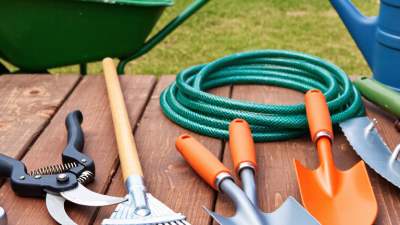
A dependable lawn setup begins with the right cutting tool. Choose a trimmer with adjustable speed and a comfortable shaft. It should reach fence lines without forcing your wrists into awkward positions. For clean borders, an edging tool with a visible guide wheel helps maintain consistent depth. Small wheels matter more than many buyers expect. They reduce wandering along paths and flower beds.

Blowers should match the property, not the advertising claim. A variable-speed model gives better control around gravel, drains, and young plants. Check airflow, noise levels, battery availability, and local electrical standards before ordering internationally. A tool that performs well in an open field may scatter debris across a narrow courtyard. That happened during one maintenance trial. Too much power created more work.

Surface care needs different equipment. A sturdy rake removes loose thatch, while a scarifier helps open compacted grass carefully. For larger lawns, an aerator improves water movement through dense soil. Inspect handle strength, replacement parts, and operating instructions before purchase. Weather changes performance too. Damp leaves cling, dry soil creates dust, and hard ground may resist shallow blades. No single kit solves every lawn. Buyers may need to adjust the routine after observing their soil, grass type, and seasonal growth.

Battery, Electric, and Gas-Powered Equipment Compared

Choosing lawn maintenance equipment in 2026 requires more than comparing engine power. Battery-powered mowers, trimmers, and blowers are quieter, cleaner at the worksite, and easier to start. They suit residential areas, schools, and noise-sensitive properties. A charged battery can handle routine mowing, but runtime drops in thick, wet grass or extreme heat. This limitation is easy to underestimate.

Corded electric equipment provides steady power without fuel storage or engine servicing. It works well for smaller gardens near a suitable outlet. However, cables can restrict movement, especially around trees, slopes, and wet ground. Global buyers should verify voltage, frequency, plug standards, and outdoor safety requirements before ordering. Small details matter.

Gas-powered equipment still offers strong cutting force and longer continuous operation. It may serve large properties, rough grass, and remote sites without charging access. Yet users must manage fuel, oil, vibration, exhaust, and regular maintenance. In my field experience, gas machines often perform reliably, but their noise can quickly become a practical problem. Battery systems feel simpler, though replacement packs can be expensive and supply varies by region. I would also question advertised runtime. Tests may use ideal grass, flat ground, and new batteries. Compare cutting width, battery capacity, service support, spare-part availability, and local operating rules before choosing.

Safety, Maintenance, and Global Purchasing Considerations

For 2026 global buyers, the best lawn equipment is not always the most powerful model. Safety, maintenance, and local support deserve equal attention. OSHA sets an 85 dBA eight-hour action level for hearing protection. The World Health Organization’s 2021 World Report on Hearing warns that over 1.5 billion people live with hearing loss. That figure is not lawn-specific, but noisy crews should still use hearing protection and limit exposure.

Choose equipment with guards, emergency stops, stable handles, and clear operating instructions. Check whether electrical models match local voltage, plug standards, and outdoor protection requirements. For battery equipment, confirm charger compatibility, spare-battery availability, and safe storage instructions. The ILO’s 2023 estimates report nearly three million work-related deaths each year. Small control failures matter. They are rarely dramatic at first.

Maintenance should be practical, not theoretical. Inspect blades, cables, belts, wheels, and fasteners before each shift. Clean grass from cooling vents and remove debris with the power source disconnected. Keep a service log with dates, operating hours, and replaced parts. ISO 5395 provides internationally recognized safety requirements for powered lawnmowers, but compliance documents still need careful checking. A certificate alone does not prove good field performance. In real purchasing, I have seen buyers focus too heavily on price and overlook spare parts. That mistake can stop a fleet for weeks. Some maintenance intervals also seem optimistic under wet, sandy conditions. Local workload should influence the final schedule.