Why Choose LED Light Panels for Global Buyers?
Global buyers are rethinking how interior spaces consume electricity and support human comfort. Led Light Panels offer an efficient, flexible option for offices, schools, retail stores, hospitals, and industrial facilities. The U.S. Department of Energy reports that LED products use at least 75% less energy than incandescent lighting. They can also last up to 25 times longer. That difference matters when maintenance teams manage thousands of ceiling fixtures across several locations.
The International Energy Agency has repeatedly identified lighting efficiency as an important part of global energy reduction. Modern panels can provide uniform illumination, high efficacy, dimming control, and compatible color temperatures. These features help buyers meet practical project requirements, not merely chase a lower purchase price. Lighting researcher Dr. Nadarajah Narendran has stated, “LEDs are not just a replacement for incandescent lamps; they are a new form of lighting.” His point remains relevant for global procurement decisions.
However, the choice is not automatically correct. Some low-cost panels develop flicker, uneven brightness, weak drivers, or difficult-to-replace components. A product may look attractive on a showroom ceiling, then perform poorly after long operating hours. Buyers should examine LM-79 photometric reports, LM-80 data, driver quality, warranty conditions, and regional certifications. These details reveal more than advertised wattage. The best decision balances energy savings, visual comfort, serviceability, and local installation realities. No single specification guarantees success. A reliable evaluation still requires testing samples in the actual space before large-scale purchasing.
What Are LED Light Panels and How Do They Work?
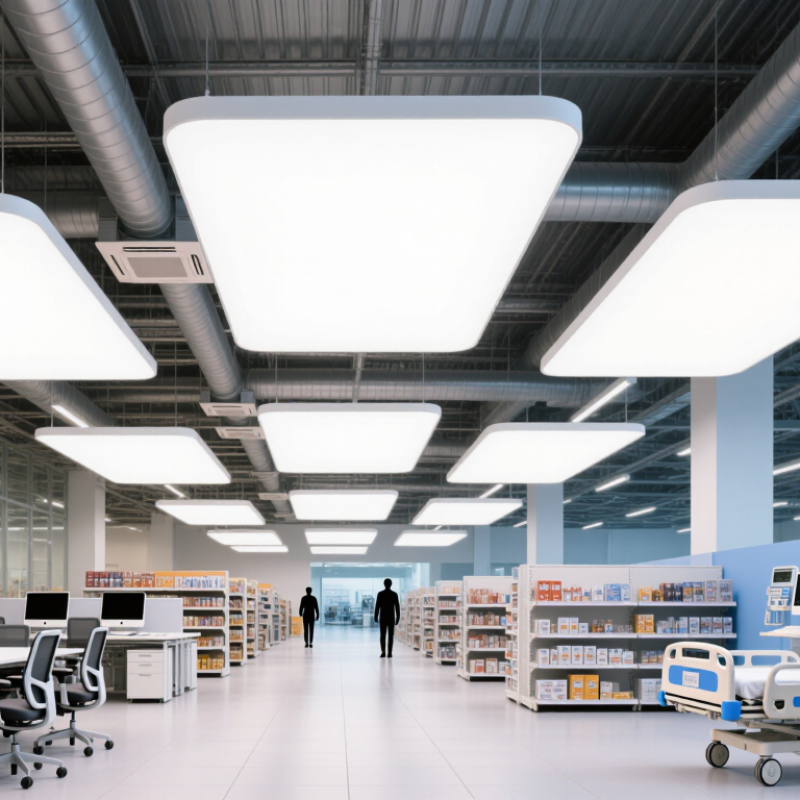
LED light panels are flat luminaires that use many small light-emitting diodes. Each diode produces light when electric current passes through a semiconductor junction. A driver changes incoming AC power into stable DC power, while a diffuser spreads the light across the panel. Many models use edge-lit LEDs and a light guide plate; others place LEDs directly behind the diffuser.
This design creates broad, soft illumination with fewer harsh shadows. The International Energy Agency reported in Energy Efficiency 2023 that lighting uses about 15% of global electricity. LED panels can reduce this demand because modern systems commonly deliver over 100 lumens per watt. The U.S. Department of Energy has also reported laboratory LED efficacies above 200 lumens per watt, although commercial performance is usually lower. Buyers should check measured efficacy, not impressive packaging claims.
Performance depends on more than brightness. Color temperature affects comfort, while color rendering shows how naturally objects appear. Flicker, glare, driver quality, and heat control also matter. A reliable panel usually lists CRI, UGR, rated life, operating temperature, and test standards. Rated life can still mislead when drivers overheat in poorly ventilated ceilings. This detail is often missed. For global projects, confirm voltage range, plug requirements, certifications, and replacement access before ordering. I have found that the cheapest panel rarely remains cheapest after difficult maintenance.
Which Features Make LED Light Panels Suitable for Global Buyers?
LED light panels suit global buyers when their performance is measurable, adaptable, and easy to verify. The International Energy Agency reported that lighting uses about 15% of global electricity demand. Efficient panels can reduce operating costs in offices, schools, warehouses, and retail spaces. The U.S. Department of Energy’s 2023 SSL R&D Plan notes that leading LED packages can exceed 200 lumens per watt under laboratory conditions. Real installations usually perform below that figure. That difference matters.
A practical panel should offer high efficacy, stable color quality, low flicker, and a long rated lifetime. Buyers should check LM-80 and TM-21 evidence instead of trusting a simple “50,000 hours” claim. Useful features include wide input voltage, replaceable drivers, emergency-lighting compatibility, and dimming protocols such as DALI or 0–10V. Modular sizes also simplify replacement when ceiling layouts differ between countries. Small details help.
Reliability depends on more than the LED chip. Thermal design, driver quality, surge protection, and heat dissipation influence performance in hot warehouses or humid coastal buildings. The International Energy Agency’s 2024 Energy Efficiency report continues to emphasize efficiency as a practical response to rising energy demand. Still, panels are not automatically sustainable. Packaging, transport distance, repair access, and disposal policies require review. Global buyers should request photometric files, safety test reports, warranty terms, and market-specific conformity documents. Some suppliers provide impressive specifications but weak evidence. A sample installation can reveal glare, uneven brightness, or audible driver noise before a large purchase.
How Do LED Light Panels Improve Energy Efficiency and Lighting Quality?
LED light panels attract global buyers because they use energy efficiently while delivering broad, even illumination. In offices, classrooms, and retail spaces, their wide light distribution reduces harsh shadows on desks and shelves. This matters when people read, inspect colors, or work near screens for many hours. From practical installations, I have found that panel layout often affects comfort more than raw brightness. Poor spacing can still create glare.
Compared with older fluorescent fixtures, quality LED panels typically produce more light from less electricity. They start instantly and contain no mercury. Many support dimming or daylight controls when properly specified. A facility manager should examine efficacy, measured in lumens per watt, instead of trusting attractive packaging claims. Color rendering is equally important. A high color-rendering rating helps skin tones, printed materials, and merchandise appear more natural. Buyers should request test reports, rated lifetime data, flicker information, and warranty terms.
Global projects need more than a low purchase price. Voltage compatibility, ceiling dimensions, emergency requirements, and local electrical standards can change the final choice. I once focused too heavily on wattage alone. That approach ignored glare, heat, and maintenance access. Not every panel performs equally in humid or dusty rooms. Site conditions deserve honest review before ordering large quantities. Energy savings also vary with operating hours, controls, and installation quality.
What Standards and Certifications Should International Buyers Check?
LED light panels attract global buyers because they offer efficient illumination, slim installation, and long operating life. The International Energy Agency reports that lighting consumes about 15% of global electricity. Efficiency matters, but paperwork matters too. A low-cost panel can create expensive problems if its test evidence is incomplete.
International buyers should request IEC 60598-1 and IEC 60598-2-1 safety testing, plus IEC 55015 and IEC 61547 electromagnetic compatibility reports. IEC 62471 evaluates photobiological safety, especially for offices, schools, and retail spaces. Check the rated lifetime against LM-80 and TM-21 data, not only marketing claims. The U.S. Department of Energy’s Solid-State Lighting R&D Opportunities report shows that LED technology continues moving beyond 200 lumens per watt in laboratory development. Real products may perform lower. That difference deserves attention. Also verify RoHS and REACH documentation for European shipments, and confirm CE, UKCA, UL, or other market-specific requirements. A certificate alone does not prove every production batch matches the tested sample.
Tips: Ask for recent laboratory reports, factory quality records, and a sample inspection before bulk ordering. Confirm voltage, flicker percentage, color tolerance, power factor, and IP rating. IEC 60529 defines IP protection levels. Review the actual test model number. Documents can be genuine yet outdated. Independent verification is safer.
Why Choose LED Light Panels for Global Buyers?
IP Code Reference for LED Light Panels Based on IEC 60529
The first IP digit indicates protection against solid particles, while the second digit indicates protection against water. These values are standardized protection levels, not a substitute for product testing or certification.
International buyers should also verify the applicable requirements for the destination market, including IEC 60598-1 for luminaire safety, EMC requirements such as CISPR 15 and IEC 61547, RoHS compliance, CE marking for relevant European Union requirements, and UL 1598 or equivalent certification routes where required in North America.
How Can Buyers Compare LED Panel Suppliers, Costs, and After-Sales Support?
Why Choose LED Light Panels for Global Buyers? Global buyers should compare more than wattage and unit price. The International Energy Agency reported that LED lighting exceeded half of global lighting sales in 2022. That growth makes supplier quality more important, not less. Request LM-79 photometric reports, LM-80 and TM-21 lifetime evidence, driver test results, and IEC 60598 compliance documents. Check whether the test model matches the quoted panel. It often does not.
Price should be measured through total cost of ownership. The U.S. Department of Energy’s 2022 solid-state lighting forecast estimated that wider LED adoption could deliver billions of dollars in annual energy savings by 2035. Yet poor thermal design can shorten service life. Compare efficacy, warranty years, driver replacement cost, installation time, and expected lumen maintenance. A low quote may become expensive after a few failed drivers. Small details matter. Ask for a sample and inspect its heat sink, diffuser uniformity, connector quality, and emergency-lighting behavior.
After-sales support needs measurable terms. Require response times, spare-part availability, replacement procedures, and warranty exclusions in writing. Suppliers should provide serial-number tracking and remote troubleshooting guidance. ISO 9001 certification can support process reliability, but it is not proof of product performance. Buyers should still audit production records and sample batches. Some comparisons remain imperfect because local labor, freight, taxes, and electrical standards differ. That uncertainty deserves a contingency budget, not optimistic assumptions.


Share On: