

Blog

Signature Lawn and Landscape LLC

What Are the Top Outdoor Lighting Manufacturers in China?

Outdoor Lighting has become a practical test of energy efficiency, optical engineering, and dependable manufacturing. The International Energy Agency estimates that lighting accounts for about 15% of global electricity consumption. That figure makes product efficiency more than a sales claim. It matters on streets, factory grounds, and building façades, where fixtures may operate for long hours.

Performance also includes what a lamp leaves unlit. In their peer-reviewed paper “Ecological Light Pollution,” researchers Travis Longcore and Catherine Rich define it as “the effect of artificial light on individual organisms and on the structure of ecosystems.” Their work is a useful reminder: glare, spill, and poorly controlled brightness deserve scrutiny alongside lumen output. A bright sample in a showroom proves little about years of outdoor service.

China’s manufacturers span mass-market suppliers and specialists in road, landscape, industrial, and solar lighting. Yet a polished catalogue does not reveal everything. Buyers should examine tested photometric data, ingress protection, thermal design, warranty terms, and the consistency of production batches. These details can be harder to compare than price. They are also where supplier claims need careful checking.

This guide introduces leading Outdoor Lighting manufacturers in China and the strengths they present across key product categories. It offers a starting point, not a universal ranking. The right partner depends on project conditions, required certifications, delivery needs, and after-sales support. Ask for evidence. Then compare the fixtures against the actual site, not just the brochure.
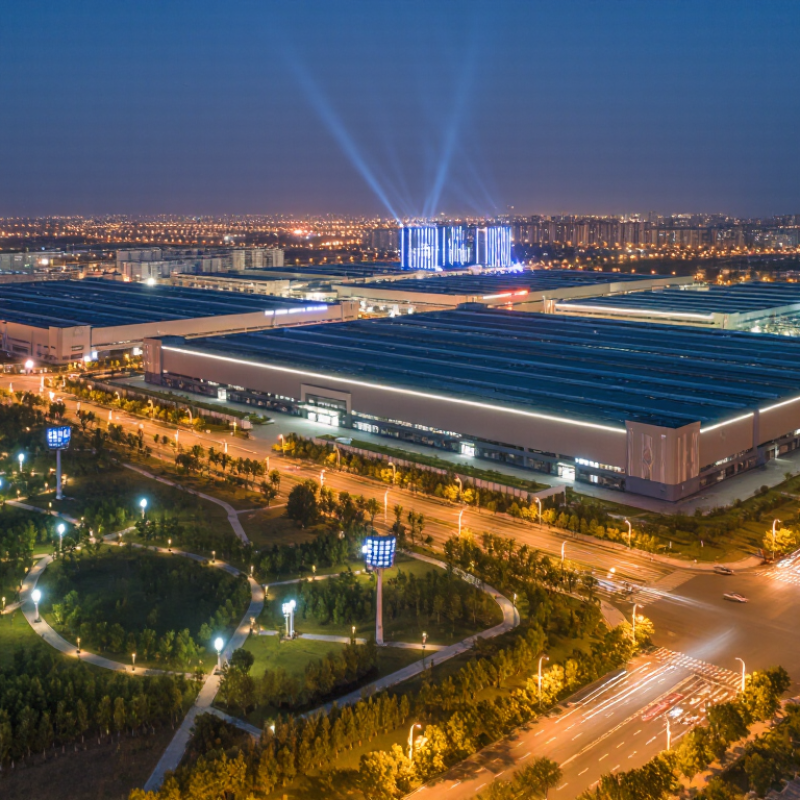
What Are the Top Outdoor Lighting Manufacturers in China?

What Defines a Top Outdoor Lighting Manufacturer in China?

A top outdoor-lighting manufacturer is defined by verified performance, not a large catalogue. Its engineers should explain how a fixture handles heat, moisture, vibration, and voltage variation. Ask for photometric files, material specifications, and test records—not just a polished sample. On a real road, glare and uneven pavement reveal weaknesses quickly.

Testing should connect to recognized methods. The U.S. Department of Energy’s Energy Saver guidance says LEDs use at least 75% less energy and last up to 25 times longer than incandescent lighting. That is a broad comparison, not a warranty for every outdoor fixture. For project evaluation, request LM-79 photometric results and LM-80 data with TM-21 projections. Check whether the reported values match the exact LED, driver, and operating conditions in the quoted product.

Manufacturing discipline matters just as much. A capable factory tracks batch numbers, checks electrical safety, and repeats sampling after production changes. Ask how it tests sealed housings, corrosion resistance, and driver temperatures; an IP rating alone does not prove long service life. Look for clear failure reporting and traceable inspection records. No factory is flawless. The meaningful difference is whether it can identify a failure, explain its cause, and document the corrective action.

What Defines a Top Outdoor Lighting Manufacturer in China?

Ingress protection is one useful benchmark for outdoor luminaires. The chart compares the two digits in three standardized IP ratings.

All three ratings indicate the highest dust-protection digit, 6. Their water-protection digits indicate protection against water jets (5 or 6) or temporary immersion (7). IP ratings are defined by IEC 60529 and China’s GB/T 4208. A strong rating is one consideration alongside optical performance, reliability, testing, and quality control.

Main Types of Outdoor Lighting Made in China

Outdoor lighting made in China covers several practical categories, each suited to its installation area. Street and area lights provide broad illumination for roads, parking areas, and loading zones. Floodlights cast stronger, more focused beams across yards, façades, or workspaces. Aluminum housings can help manage heat, while lens design affects glare and light coverage. The categories overlap more than product listings suggest.

For gardens and walkways, common options include bollard lights, path lights, spike lights, and recessed ground fixtures. Wall and step lights help define entrances, stairs, and boundaries without illuminating an entire space. Solar models can work well where wiring is difficult, though shade and short winter days may reduce output. Ground-recessed fixtures need suitable drainage and sealing; brightness alone does not ensure dependable performance. Check light distribution, color temperature, ingress protection rating, and serviceable parts against the site conditions.

Tips: Review a photometric file when available, and compare beam spread with the area you need to light. Measure after dark. A simple on-site test can reveal glare or dim patches that specifications may not show. Also check mounting details and cable entry points before ordering; these are easy to overlook.

Leading Chinese Outdoor Lighting Manufacturers and Their Strengths

China’s outdoor lighting manufacturers often stand out for broad product ranges, flexible production, and access to established component supply chains. Many can adapt housing sizes, finishes, beam angles, and control options for different projects. That flexibility helps buyers match lights to pathways, building façades, or landscaped areas. Production capacity can also support larger orders. Still, capabilities vary between factories.

Their strengths are clearest when technical requirements are specific. Ask how manufacturers manage heat dissipation, water resistance, corrosion protection, and consistent color output. Request test reports for the exact model, not just a similar product. Some suppliers offer sample adjustments and custom tooling, while others focus on standard designs and faster turnaround. A bright sample is not proof of long-term reliability. That distinction matters. It is also easy to overlook finish quality until fixtures are installed outdoors.

Tips: Share installation photos, target light levels, and local climate conditions before requesting a quote. Confirm warranty terms, spare-part availability, and production lead times in writing. Test a sample under realistic conditions. A small mismatch can become costly across a whole site.

How to Compare Manufacturers by Quality, Certifications, and Service

Comparing outdoor lighting manufacturers in China takes more than checking product photos and quoted prices. Ask for test reports tied to the exact fixture model, not a similar item from the same catalog. Review relevant safety and performance certifications, and confirm their scope and validity with the issuing body. For outdoor use, check ingress and impact ratings, electrical protection, and how the fixture handles heat and moisture. Details matter.

Quality also shows up in the parts you may not notice at first: gasket fit, cable entries, coating thickness, and consistency between samples and production units. Request a sample and inspect it after repeated switching or exposure to water. Ask how the factory tracks defects and handles changes in components. A polished sample is reassuring, but it cannot guarantee every shipment will match. That deserves a second look.

Service is easier to assess with practical questions. How quickly does the team answer technical queries? Can it provide installation guidance, replacement parts, and clear warranty terms? Ask for a named contact and realistic lead times, including for spare drivers or lenses. A low price may still work for a simple project; it may not suit a site where repairs are difficult. No checklist removes uncertainty, so compare written evidence with your own project needs.

Choosing the Right Chinese Manufacturer for Your Project

Choosing the right Chinese outdoor lighting manufacturer starts with the conditions at your project site. Share the mounting height, beam direction, operating hours, and exposure to salt, dust, or heavy rain. Specific details help suppliers recommend suitable fixtures instead of offering a generic catalog. Small details matter.

Ask for technical drawings, photometric files, material specifications, and test records for the exact model under consideration. For a coastal walkway, for example, check the housing material, surface finish, seals, and fasteners. A stated ingress rating is useful, but ask how the product was tested and whether the documentation matches the quoted configuration. One overlooked connector can affect installation.

Assess production quality as well as product design. Request a pre-production sample, inspect wiring and finish, and agree on inspection points before placing a larger order. Clarify lead times, replacement-part availability, packaging, and how design changes are approved. A low price may leave important assumptions unstated. Ask for them in writing.

Communication deserves a practical test. Send a drawing with one unusual mounting requirement and see whether the response addresses it clearly. Compare quotations line by line, including driver details and warranty terms. Even a careful checklist can miss a mismatch, so have your project engineer review the final specifications before approval.

What Are the Top Outdoor Lighting Manufacturers in China? - Choosing the Right Chinese Manufacturer for Your Project
Manufacturer Specialization Common Product Scope Technical Checks Typical Project Fit Evidence to Request
Road and area lighting Roadway luminaires, street lights, area lights, and pole-mounted fixtures Photometric files, beam distribution, glare control, thermal design, surge protection, and applicable roadway-luminaire safety requirements such as IEC 60598-2-3 Roads, car parks, campuses, industrial sites, and public spaces IES or LDT files, test reports for the proposed configuration, installation details, and a sample lighting calculation for the project layout
Floodlighting LED floodlights for façades, sports areas, yards, and security lighting Beam angle, aiming options, glare, wind loading, ingress protection, and applicable floodlight safety requirements such as IEC 60598-2-5 Building exteriors, warehouses, sports facilities, and open work areas Photometric data, mounting and aiming drawings, thermal test information, and test documentation for the exact model
Landscape and pathway lighting Bollards, garden lights, step lights, and low-level pathway fixtures Ingress protection, impact resistance, drainage, corrosion resistance, glare control, and suitability for the installation environment Parks, gardens, walkways, hospitality sites, and residential landscapes Product drawings, material and finish specifications, IP/IK test reports where claimed, and installation instructions
Solar outdoor lighting Integrated or separate-panel solar street and area lights Panel and battery sizing, battery chemistry, operating modes, autonomy assumptions, charging performance, and performance under local seasonal sunlight conditions Locations with limited grid access or projects seeking standalone lighting Battery and panel specifications, runtime assumptions, test conditions, controller settings, and a site-specific energy assessment
Coastal and high-corrosion applications Outdoor luminaires designed for marine, coastal, or chemically demanding environments Housing and fastener materials, coating system, sealing design, galvanic-corrosion risks, and the limits of any salt-spray test results Coastal roads, ports, waterfronts, and industrial environments Material declarations, coating specifications, corrosion-test method and duration, and maintenance guidance; salt-spray results alone do not establish service life
Custom OEM/ODM production Project-specific housings, optics, finishes, controls, and electrical configurations Design ownership, tooling arrangements, change control, production consistency, sample approval, and traceability of components Projects requiring a tailored appearance, mounting arrangement, or control interface Approved drawings and samples, bill of materials, quality-control plan, change-notification process, and written tooling and intellectual-property terms

Selection note: “Top” is not a ranking in this table. Compare manufacturers against the project’s application, destination-market requirements, verified test documentation, production controls, and after-sales support. IP ratings are defined under IEC 60529; IK ratings are defined under IEC 62262. Required approvals and conformity documentation depend on the product and destination market.