

Blog

Signature Lawn and Landscape LLC

7 Tips for Buying Polyester Nonwoven Fabric

Choosing the right Polyester Nonwoven fabric starts with its intended job. A lightweight sheet for packaging may not suit filtration, insulation, or furniture backing. Small differences matter. Fiber blend, fabric weight, thickness, bonding method, and surface texture can affect strength, airflow, softness, and durability. A sample that feels firm in your hand may still perform poorly under repeated use.

Before requesting quotes, write down the performance requirements that matter most. Note the target weight in grams per square meter, roll width, color, and expected order volume. Ask suppliers how the material is bonded and whether they can provide a technical data sheet. For demanding uses, request test results relevant to your application, such as tensile strength, air permeability, or dimensional stability. Test the fabric under realistic conditions, too. A brief sample check is useful, but it cannot reveal every production issue.

Price deserves attention, but it should not decide the purchase alone. Compare minimum order quantities, lead times, packaging, and consistency between batches. Clarify what “custom” means before approving a specification. Sometimes the cheapest offer is perfectly suitable; sometimes it leaves an important detail unanswered. That is easy to miss. These seven tips will help buyers ask clearer questions, evaluate samples more carefully, and choose Polyester Nonwoven fabric with fewer surprises. No checklist replaces judgment, and specifications may need adjustment after testing.
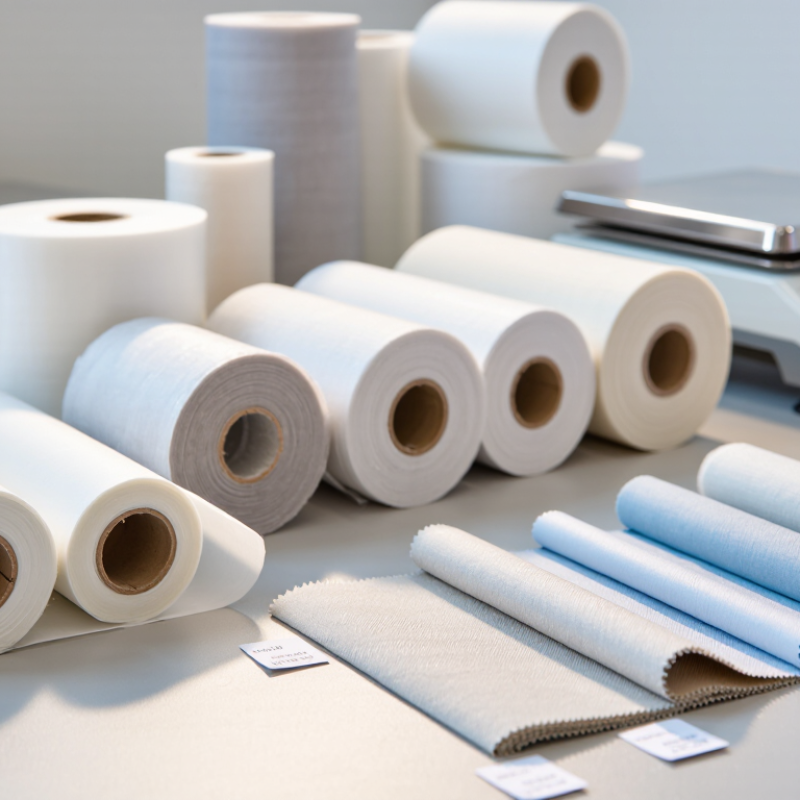
7 Tips for Buying Polyester Nonwoven Fabric

Understanding Polyester Nonwoven Fabric and Its Common Uses

Polyester nonwoven fabric is made by arranging fibers into a web and bonding them, rather than weaving yarns over and under each other. Bonding may use heat, pressure, or mechanical needling. The method affects the fabric’s feel, strength, airflow, and resistance to wear. Some grades are soft and flexible; others feel firm, almost board-like. That difference matters.

Common uses include filter media, furniture backing, automotive liners, insulation layers, geotextiles, and reusable shopping bags. In filtration, pore structure and airflow influence performance. For upholstery backing, dimensional stability and tear strength may matter more. A fabric that works well in one application may fail in another, even when both products look similar. Appearance alone is a poor guide.

When comparing options, check weight per square meter, thickness, bonding method, and any finish or coating. Ask for test data relevant to the intended use, such as tensile strength or air permeability. Request a sample, then handle it and test it under realistic conditions. A small swatch can reveal stiffness or lint that a specification sheet misses. I would not assume “water-resistant” means waterproof; the treatment and construction need clarification. Suppliers’ terms can vary, so confirm how each measurement was taken.

Defining the Fabric Properties Your Project Requires

7 Tips for Buying Polyester Nonwoven Fabric

Defining the Fabric Properties Your Project Requires

Before comparing polyester nonwoven fabrics, define the job the material must do. A lightweight liner may need softness and airflow, while a reusable tote needs better tear resistance. Note the required weight, thickness, tensile strength, and stretch. These values help narrow your choices. Feel matters, but it is not a specification.

Tips: Write down your must-have properties and acceptable ranges. Request a technical data sheet, then compare samples under the same conditions. Bend a swatch, hold it to the light, and check whether its texture suits the product. Small differences can matter.

Also consider the fabric’s working environment. Moisture, heat, sunlight, or repeated abrasion may affect performance. For filtration, define the particle range and airflow needs; for cushioning, assess compression and recovery. Ask how the material is bonded, since bonding methods can influence stiffness and durability. Do not assume a heavier fabric is always stronger. That shortcut can mislead. A checklist may still miss something, so test a finished sample in realistic use before ordering at scale.

Comparing Weight, Thickness, Bonding, and Surface Finish

When comparing polyester nonwoven fabric, check weight in grams per square meter alongside thickness. A heavier sheet may feel denser, but its fibers can be packed differently. Thickness alone does not reveal strength or softness. Press a sample gently, then see how quickly it recovers. Feel the difference.

Tips: Match weight to the job, not just the lowest price. For padding or filtration, ask how the fabric performs under compression or airflow. Compare bonding methods, too: thermal bonding can create a firm sheet, while needle-punched material may feel more flexible. Ask for a sample before ordering a full roll.

Surface finish affects handling and performance. A smooth face may slide easily, while a textured finish can grip or spread liquid differently. Check both sides under good light for uneven bonding, loose fibers, or inconsistent color. One detail buyers sometimes overlook is how the fabric behaves after folding; a sample can crease more than expected. Small details matter. Record the specifications you tested, since terms like “soft” and “heavy” can mean different things to different suppliers.

7 Tips for Buying Polyester Nonwoven Fabric - Comparing Weight, Thickness, Bonding, and Surface Finish

Tip What to Compare Typical Options or Indicative Range What to Check Buying Guidance
1 Basis weight Common grades range from about 20 to 300 g/m², depending on the process and intended use. Confirm the stated weight in g/m² and ask how it is measured. Compare production samples, not just product descriptions. Choose weight according to required coverage, strength, and flexibility. A higher basis weight does not automatically mean better performance for every application.
2 Thickness and bulk Lightweight spunbond may be below 1 mm, while loftier needle-punched materials can be several millimetres thick. Check the measurement method and pressure used during testing; compressible materials can give different readings under different loads. Match thickness to cushioning, filtration, insulation, or spacing needs. Compare thickness alongside basis weight because bulk varies by construction.
3 Bonding method Typical methods include thermal bonding, needle punching, and hydroentanglement. Some products use more than one process. Ask how the fibres are bonded and whether the surface or internal structure is consolidated. Check tensile strength, tear resistance, and linting where relevant. Thermal bonding can produce a stable, relatively even web; needle punching can create a thicker, more porous structure; hydroentanglement can make a soft, textile-like web.
4 Surface finish Available finishes may include plain, calendered, embossed, brushed, or treated surfaces. Inspect both sides for texture, uniformity, loose fibres, and appearance. Specify which side must face outward if the sides differ. Select the finish for the intended contact, appearance, or processing requirements. A calendered surface may be smoother, while a brushed surface may feel softer.
5 Porosity and air permeability Values vary widely with fibre diameter, web structure, bonding, and finishing; there is no single standard range for all polyester nonwovens. Request test results using a stated method and test conditions. For filtration or airflow uses, evaluate the fabric in the final assembly. Prioritize measured performance over visual openness. Heavier or more tightly bonded material may restrict airflow, but construction also matters.
6 Dimensional stability and strength Performance depends on fibre orientation, bonding, basis weight, and any heat or surface treatment. Compare machine-direction and cross-direction tensile properties, elongation, tear resistance, and shrinkage after the relevant exposure. Choose samples that withstand the converting, sewing, forming, or installation steps in your process. Test in the direction and conditions that reflect actual use.
7 Roll format, tolerances, and sampling Roll widths, lengths, and weight or thickness tolerances are product-specific and should be confirmed before ordering. Specify usable width, roll length, winding direction, core size, packaging, and acceptable tolerances. Approve a representative sample or trial roll. Put the agreed specification and test methods in writing. Check that the delivered rolls are consistent across the order, not only within a single sample.

Ranges and descriptions are indicative only. Actual polyester nonwoven properties vary by fibre, manufacturing process, finish, and test method; confirm requirements with representative samples and agreed testing.

Evaluating Supplier Quality, Testing, and Certifications

A supplier’s sample can look consistent while production rolls vary in weight, bonding, or surface feel. Textile Exchange’s Materials Market Report 2024 estimates that polyester made up about 57% of global fiber production in 2023. That scale makes supplier traceability and batch control worth checking, not assuming. Ask for recent production records and a certificate of analysis linked to the exact fabric grade. Numbers need context.

Tip: Request test results for the same construction you plan to buy. Check basis weight, tensile strength, thickness, and air permeability against your intended use. ISO 9073 methods provide common approaches for testing nonwovens, but confirm the method and conditioning details on each report. A result without a sample ID or test date is hard to verify. Small details matter.

Review the supplier’s quality system and verify that each certificate covers the actual site, product, and process. ISO 9001 indicates a quality-management system; it does not certify fabric performance. Where chemical restrictions or skin contact matter, request relevant chemical test reports and confirm their scope with the issuing laboratory. Compare a retained sample with the delivered roll, then record any differences. This step can feel fussy, but skipping it may hide a real mismatch. A supplier who answers clearly is useful; still, clear answers need evidence.

Calculating Total Cost and Verifying a Sample Before Ordering

For polyester nonwoven fabric, compare landed cost, not just the quoted price per kilogram. Add freight, packaging, inspection, cutting waste, minimum-order quantities, and any finishing charges. Request a cost breakdown using the same width, basis weight, roll length, and delivery terms. Textile Exchange’s Materials Market Report 2024 estimates that polyester represented about 57% of global fiber production in 2023. That scale shows how widely polyester is used, but it does not set a fair price for a specific nonwoven grade.

Tip: Build a simple cost sheet. Price one usable square meter, including expected waste. A low roll price can look less attractive after trimming or rejected material. I would also check whether the supplier’s quoted weight is nominal or measured; that detail is easy to overlook.

Before ordering, ask for a sample from the same production specification, not merely a similar fabric. Check basis weight, thickness, width, hand feel, color, and visible defects. Where performance matters, test tensile strength or air permeability against your written requirements. ASTM D3776/D3776M provides methods for measuring fabric mass per unit area, while ASTM D737 covers air-permeability testing. Record results and retain a labeled sample for comparison with the delivered rolls. A small sample cannot prove every production run will match. Still, it can reveal a mismatch before a large order makes it costly.