

Blog

Signature Lawn and Landscape LLC

How to Choose Insulated Combination Pliers?

Choosing Insulated Combination Pliers is not just about finding a comfortable grip or a sharp cutter. The right pair should match the task, carry clear insulation markings, and feel controlled when held. A crowded tool bag can make similar models look interchangeable. They are not.

Electrical educator Mike Holt’s safety teaching can be paraphrased in one practical line: a tool’s rating matters only when the tool is suitable, undamaged, and used correctly. Check the stated voltage rating and applicable certification, such as IEC 60900, rather than trusting a bright handle or vague “insulated” label. Read the maker’s instructions, too. Ratings are not permission to work carelessly, and insulated pliers do not replace proper isolation procedures.

Look closely at the details. Do the jaws meet evenly? Can the cutter handle the wire types you actually work with? Does the handle stay secure, without cracks, cuts, or exposed metal? Small flaws matter. Even a stiff hinge can affect control when you are gripping a connector in a cramped panel. Consider jaw shape, handle comfort, and storage protection alongside price. A premium finish alone proves little.

This guide will compare these features and explain what to inspect before buying. It will also cover common selection mistakes, including choosing by appearance alone. One honest limitation: no single pair suits every hand or task. Start with the work you expect to do, then verify the product documentation. If anything is unclear, pause and check with the manufacturer or a qualified electrical professional. A little doubt is useful here.
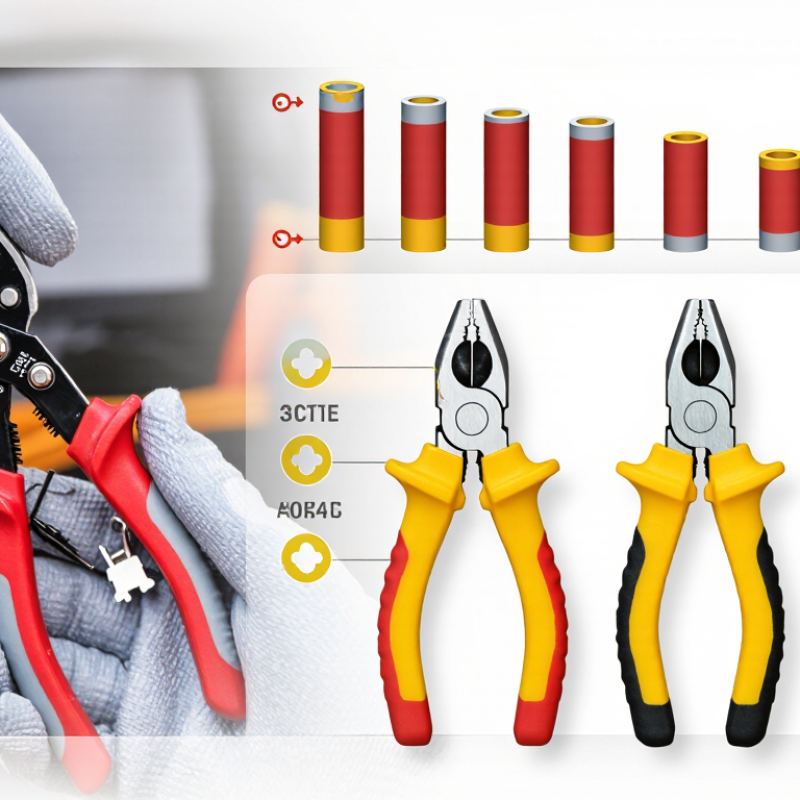
How to Choose Insulated Combination Pliers?

Understand the Design and Function of Insulated Combination Pliers

Insulated combination pliers bring several functions into one tool. The tapered jaws reach into narrow spaces, while the serrated gripping area holds wire or small components. Near the pivot, side-cutting edges trim wire. The pivot should move smoothly without excessive side-to-side play. Insulated handles cover the grips and often include raised guards to help prevent a hand from slipping toward the metal head. Check the tool’s voltage rating and markings; insulation is not a general guarantee of safety.

Choose a pair that fits your hand and the work. A secure grip should feel steady, not force your fingers to stretch around thick handles. Close the jaws and look for even contact; inspect the cutting edges for chips or gaps. The tool can be useful for gripping, bending, and cutting, but it is not designed for every task. I’ve found that a comfortable handle can still feel awkward when working in a tight space. Test the fit before relying on it.

Tips: Before use, check the insulation for cuts, cracks, or exposed metal. Keep the jaws clean and dry. Follow the tool’s marked rating and established electrical safety procedures; insulated pliers alone do not make hazardous work safe.

Check Voltage Rating and Applicable Safety Standards

Choose insulated combination pliers with a clear voltage rating printed on the tool, not just on its packaging. A common rating is 1,000 volts AC, but that marking does not make every task safe. Match the tool’s rating to the work and follow your workplace procedures. Do not guess.

Check that the pliers meet a recognized insulated-tool standard, such as IEC 60900 or ASTM F1505, where applicable. Standards specify design and testing requirements; they are more meaningful than a seller’s general claim of “electrical safety.” Markings can be small or worn, so inspect them under good light. If the rating or standard cannot be verified, choose another tool.

Look closely at the insulation around the handles and protective stops. Cuts, cracks, swelling, or exposed metal are reasons to remove the pliers from service. Damage matters. Keep the tool clean and dry, and never assume insulation protects against every hazard. Even a correctly rated pair is only one part of a safe system. I find labels easy to overlook when comparing tools, so checking them before purchase is a habit worth keeping. Follow current local requirements and use insulated tools only within your training and assigned work limits.

Choose the Right Size, Jaw Shape, and Cutting Capacity

Choose plier length for the space and force required. A 160 mm tool is easier to control inside a crowded panel; a longer handle can improve leverage on thicker conductors. It may also feel awkward in small hands. Jaw shape matters just as much. Narrow, tapered jaws reach recessed terminals, while broader jaws grip flat metal and larger components. Check that the jaws meet evenly, with no visible gap at the tips. Small details matter.

Match the cutter to the wire material and diameter, not just its appearance. Check the tool’s stated capacity for copper, aluminum, and hard wire separately; these limits can differ. IEC 60900:2018 covers insulated hand tools for live working up to 1,000 V AC or 1,500 V DC. That scope is not a substitute for checking the tool’s individual markings, condition, and suitability for the task. Insulation does not make an undersized cutter safe. One judgment call remains: catalog dimensions cannot tell you how comfortably a tool fits your grip. Test the feel, if possible, and leave capacity margin rather than cutting at the stated limit.

Evaluate Handle Insulation, Grip, and Build Quality

Insulated combination pliers should feel secure before you judge their appearance. Check that the insulating sleeves cover the handles evenly, with no cuts, bubbles, loose edges, or exposed metal near your hand. Look for clear voltage-rating markings and follow the tool’s stated limits. Insulation can be damaged by heat, chemicals, or repeated abrasion. It is not a reason to work on energized equipment when power can be safely disconnected.

Tips: Hold the pliers with dry hands and squeeze them around a small piece of scrap wire. The grip should stay steady without sharp pressure points. Open and close the jaws several times. They should move smoothly, with little side-to-side wobble. A small flaw matters.

Build quality shows in the details. Check whether the cutting edges meet cleanly and whether the jaws align when closed. A heavy tool is not automatically a strong one; excess weight can tire your hand during repeated cuts. If possible, compare the hinge movement and handle fit in person. I once overlooked a slightly loose sleeve because the jaws felt excellent. That was a poor tradeoff. Choose a pair that balances secure insulation, comfortable control, and precise, consistent construction.

How to Choose Insulated Combination Pliers? - Evaluate Handle Insulation, Grip, and Build Quality

Evaluation Dimension What to Check Good Signs Warning Signs Suggested Weight
Insulation rating and certification Check for a clear voltage rating, applicable standard marking, and product documentation. Common standards for insulated hand tools include IEC 60900 and ASTM F1505. Markings and documentation are consistent, legible, and traceable to the specific tool. A 1000 V AC rating is commonly found on tools designed for electrical work within the relevant standard. No voltage rating, unclear or inconsistent markings, damaged insulation, or claims that cannot be supported by documentation. 30%
Insulation coverage and condition Inspect the handle insulation for cuts, cracks, peeling, bubbles, gaps, or exposed conductive parts where insulation is required. Insulation is continuous, firmly attached, and free from visible damage or contamination. Any visible damage, loose covering, contamination that cannot be cleaned, or signs of unauthorized repair. 20%
Grip and handle ergonomics Assess handle shape, surface texture, fit in the hand, and whether the grips remain secure during controlled use. Handles feel stable and comfortable, provide a nonslip surface, and allow the jaws to be controlled without excessive hand strain. Slippery or loose grips, sharp edges, awkward sizing, or a handle shape that makes controlled operation difficult. 15%
Jaws and cutting edges Check jaw alignment, serrations, cutting-edge condition, and whether the jaws meet evenly when closed. Jaws align properly, close smoothly, and show no chips, excessive gaps, or obvious deformation. Misaligned jaws, chipped cutting edges, binding movement, or visible damage that affects gripping or cutting. 15%
Joint and overall construction Operate the joint through its full range and inspect for excessive play, rough movement, corrosion, or loose components. The joint moves smoothly, feels stable, and holds the jaws in alignment during normal hand operation. Stiff or gritty movement, excessive side-to-side play, loose rivets, or visible corrosion. 10%
Size and intended task Compare tool length and jaw capacity with the work area, conductor sizes, and gripping tasks specified by the manufacturer. The tool fits the task and allows controlled access without overloading the jaws or handles. Using a tool outside its stated capacity or choosing a size that prevents secure access and control. 10%
Total suggested evaluation weight 100%

Safety note: Insulated pliers are not a substitute for safe electrical work practices. Use only tools that are appropriately rated, certified where required, and in good condition; follow applicable procedures and verify that the circuit is de-energized whenever possible.

Inspect Certification, Condition, and Suitability for the Task

How to Choose Insulated Combination Pliers?

Inspect the insulation markings before considering price or convenience. The handles should show a clear voltage rating and certification information tied to an applicable standard. Check that the markings are legible and that the tool can be traced to its manufacturer or supplier. A rating is useful evidence, but it does not guarantee safe use after damage or misuse. Small flaws matter.

Examine the full length of each handle under good light. Look for cuts, cracks, blistering, exposed metal, or insulation that has pulled away near the jaws. Move the pivot and check that the jaws meet evenly without excessive looseness. A stiff joint may be fixable on ordinary pliers, but modifying an insulated tool can compromise its protection. Set it aside if its condition is uncertain. Tape is not a repair.

Suitability depends on the job. Compare jaw shape, grip size, and cutting capacity with the wire and access you actually have. Narrow jaws may reach a crowded panel, while larger handles can offer better control on thicker material. Check the tool’s stated limits rather than judging by appearance. Even certified pliers are not a substitute for de-energizing equipment and following workplace procedures. The right tool can still be the wrong choice for a particular task.