How to Choose the Best Carton Box Material in 2026?
Choosing the right Carton Box Material in 2026 means looking beyond price and appearance. The board must protect the product through stacking, handling, and delivery, then still suit the intended recycling route. A carton that looks sturdy under showroom lights may soften in a damp warehouse. Small details matter: product weight, box dimensions, print coverage, storage humidity, and how tightly cartons are palletized.
Packaging researcher Dr. Susan Selke’s work offers a useful lens on material choices. A practical principle consistent with that work is: “Choose the board for the product’s real journey, not just its shelf appearance.” That is a guide, not a verified verbatim quotation. Keep the whole journey in view. Corrugated board can provide cushioning and stacking strength, while folding carton board may suit lighter products and refined retail presentation. Recycled content can support resource goals, but performance depends on the grade, construction, and supply conditions. There is no universal winner.
This guide compares common carton materials, explains key performance factors, and shows what to ask suppliers in 2026. Consider samples, not assumptions. Test cartons with the actual product and shipping conditions where possible. A few measurements can expose weak corners, crushed flutes, or unnecessary board weight. Some choices remain imperfect; cost, protection, and material use do not always align neatly. The better decision is the one supported by clear specifications and practical testing.
Define Shipping Loads with ASTM D4169 Distribution-Performance Tests
Choosing carton material by edge-crush or burst strength alone can miss what happens across a shipping route. ASTM D4169 evaluates the complete shipping unit against a selected distribution cycle. Depending on the cycle, tests may include conditioning, compression, vibration, and shock. The standard provides three assurance levels, helping teams match test severity to shipment risk. More severe testing is not automatically better. Test the actual packed carton, including its closure, inserts, payload, and pallet pattern. Small changes matter.
The Fiber Box Association’s 2023 industry data put U.S. corrugated shipments at roughly 378 billion square feet. That scale makes consistent specifications valuable, but every route is different. For a 12-kilogram glassware carton, record stacking time, temperature, and handling points before choosing single-wall or double-wall board. Then select the relevant D4169 sequence and inspect corner crush, seam opening, and product movement. Useful data. Imperfect reality. A laboratory pass can still miss wet loading docks, uneven pallets, or unusually rough transfers. Document those assumptions, and retest when the package or route changes.
Compare 32 ECT (32 lb/in) with 200# Mullen Burst (200 psi)
How to Choose the Best Carton Box Material in 2026?
A 32 ECT carton is rated for edgewise compression, measured in pounds per linear inch. This test helps estimate how well a box resists crushing when stacked. A 200# Mullen carton is rated for burst strength, measured in pounds per square inch. It measures resistance to pressure that could rupture the board. These ratings describe different performance qualities, so they are not direct equivalents.
For warehouse pallets with stable, even loads, 32 ECT may be a practical choice. For shipments exposed to rough handling or concentrated pressure, 200# Mullen board may offer useful resistance. Still, neither rating tells the whole story. Box dimensions, flute type, moisture, and how tightly cartons are stacked can change real-world performance. A damp corner can weaken a box quickly.
Tips: Match the rating to the damage risk. Ask a packaging specialist to review your carton size, product weight, stacking time, and shipping conditions. If possible, test sample boxes on your actual route. One detail is easy to miss: a stronger board can add cost and weight without solving the real problem. Sometimes, the best choice is not obvious.
Choose Flute Size: B-Flute Is About 3 mm; C-Flute About 4 mm
B-flute is typically about 3 mm thick, while C-flute is around 4 mm. These measurements are useful starting points, not fixed guarantees. Actual thickness can vary with paper weight, production conditions, and board construction. Ask for a sample if the fit inside a carton is tight.
B-flute has a finer profile, so it can provide a smoother surface for printing and fit more boxes onto a pallet. It also works well for many lightweight products and retail cartons. C-flute’s extra height can offer more cushioning and stacking support, which may help when boxes travel through several handling points. But flute size alone does not determine strength. The liner papers and overall board grade matter too.
Test the real package. Place the product inside, add its usual protective material, and check whether the box closes without pressure. Then stack a few filled cartons and look for panel bowing or crushed corners. Small differences show up fast. C-flute is not automatically safer, and B-flute is not always more efficient. I have seen teams choose by thickness alone, then rethink the choice after testing their actual shipping setup. The best option depends on the product, storage conditions, and how the carton will be handled.
How to Choose the Best Carton Box Material in 2026? - Choose Flute Size: B-Flute Is About 3 mm; C-Flute About 4 mm
Compare common corrugated flute profiles by approximate board thickness, typical uses, and practical trade-offs. Actual dimensions and performance vary with paper grades, production tolerances, and board construction.
| Flute profile | Approx. board thickness | Typical characteristics | Common applications | Practical selection note |
| A-flute | About 4.5–5.0 mm | Thick profile with good cushioning and stacking performance; coarser surface than fine flutes. | Fragile goods and shipments needing added cushioning. | Consider when cushioning is a priority and a larger carton is acceptable. |
| B-flute | About 2.5–3.0 mm | Relatively flat surface, good puncture resistance, and efficient use of space. | Many shipping cartons, die-cut packaging, and inner packaging. | A versatile option when printability, converting, and compact storage matter. |
| C-flute | About 3.5–4.0 mm | A balance of cushioning and stacking strength; thicker than B-flute. | General-purpose transport packaging and larger shipping boxes. | Consider for everyday shipping where cushioning and compression resistance are both needed. |
| E-flute | About 1.0–1.8 mm | Thin profile with a smooth surface suitable for detailed printing; takes up less space than coarser flutes. | Retail-ready packs, mailers, and lightweight product cartons. | Choose when appearance and compact packaging are important; assess protection needs for shipping. |
| F-flute | About 0.6–1.0 mm | Very fine profile that supports a smooth printed surface and compact pack design. | Small cartons, specialty retail packs, and lightweight packaging. | Best suited to smaller, lighter products; confirm the required shipping strength. |
Selection tip: Flute size alone does not determine carton strength. Paper weight and grade, single-wall or double-wall construction, box dimensions, joint design, moisture, and stacking conditions also affect performance. Confirm the final specification with testing appropriate to the shipment.
Assess Fiber Sourcing Against AF&PA’s 60% U.S. Paper Recovery Rate
How to Choose the Best Carton Box Material in 2026?
Assess Fiber Sourcing Against AF&PA’s 60% U.S. Paper Recovery Rate
When comparing carton materials in 2026, ask where the fiber came from and where it can go after use. The American Forest & Paper Association reported that 60% of paper consumed in the United States was recovered for recycling in 2023. This national rate is a useful benchmark, not a promise that every carton will be recycled. Local collection rules, coatings, food residue, and sorting capacity all affect the outcome. Good intentions are not enough.
Request supplier documentation for recycled-fiber content, fiber origin, and sourcing claims. Compare cartons by required strength, not board weight alone. A box that crushes during stacking can waste both product and freight. Ask for compression or edge-crush test results under realistic humidity and load conditions. A small wet-corner test may reveal weaknesses, but it cannot replace standardized testing. Choose fewer coatings or plastic windows when protection allows, and check whether local facilities accept the design. Recycled content and recyclability are related, but not identical. That distinction is easy to miss.
Tips: Get fiber percentages in writing. Check local acceptance rules. Test a filled carton in transit, then record damage and returns. Revisit the choice when seasonal humidity changes. One caveat: the lightest carton may not have the lowest impact if failures increase.
Verify Board Performance with Box-Compression and Moisture Tests
A carton can look sturdy on a sample table and still fail under a loaded pallet. Choose material by testing the finished box, not by board thickness alone. Record its dimensions, flute direction, and board grade so each sample can be compared fairly. Small differences matter.
A box-compression test measures how much top-to-bottom force a carton withstands before it buckles. Test boxes in the same orientation and conditioning state, using several samples rather than one. Compare the results with the actual stacking load and storage duration, then allow a practical safety margin. A single high score can be misleading; real cartons vary.
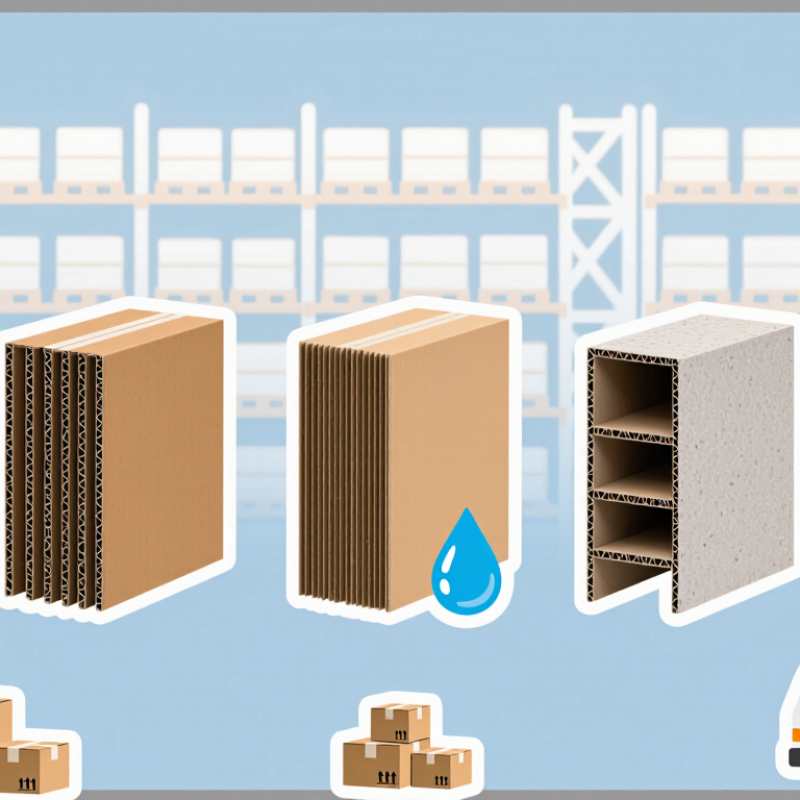
Moisture can soften paper fibers and reduce stacking strength. Condition samples at humidity levels that reflect shipping or warehouse conditions, and note any exposure to condensation or damp floors. Retest compression afterward. That is useful. If performance drops sharply, consider a more moisture-resistant board or better storage controls, then verify the change with another test. Lab conditions never capture every handling mistake, so keep that limitation in view.
How to Choose the Best Carton Box Material in 2026?
Verify board performance with box-compression and moisture tests. Start by conditioning samples consistently before comparing results.
How to read this chart: Both references specify nominal conditioning setpoints of 23°C and 50% relative humidity. These are conditioning conditions, not box-compression results. After conditioning, test cartons using the same procedure and compare measured compression strength; moisture exposure can affect results, and the amount of change depends on the board and carton design.
References: ISO 187, paper, board and pulps — standard atmosphere for conditioning and testing; ASTM D4332, standard practice for conditioning containers, packages, or packaging components for testing.


Share On: