How to Choose the Best Bubble Wands for Wholesale?
Choosing the best Bubble Wands for wholesale requires more than comparing colors, shapes, and quoted prices. Retail buyers need products that perform consistently, survive shipping, and look attractive on crowded shelves. A well-designed wand should have a comfortable handle, smooth edges, secure joints, and openings that create steady bubbles. Small details matter. A loose connector can disappoint children and increase returns. A weak package may arrive crushed before reaching the store.
Experience with product sampling shows why bulk decisions should never rely on photos alone. Request physical samples and test them with the intended bubble solution. Check bubble size, dipping speed, grip comfort, drying time, and cleaning needs. Compare several batches when possible. One sample may look excellent, yet production quality can vary. That is easy to miss.
Reliable suppliers should explain material choices, mold tolerances, packaging methods, lead times, and quality inspections. Ask for clear product specifications and relevant safety documentation for your target market. Independent testing can provide added confidence, especially for products handled by children. Still, paperwork does not replace practical inspection. Check every detail.
Wholesale success also depends on realistic forecasting. Consider seasonal demand, storage space, carton dimensions, minimum order quantities, and replacement policies. Bright colors may sell quickly, but excessive variation can complicate inventory. A lower unit price is not always the better value. I have seen attractive orders lose profit through damaged packaging and inconsistent sizing. That lesson is easy to overlook. Careful testing, honest supplier communication, and measurable quality standards help buyers choose Bubble Wands with fewer surprises.
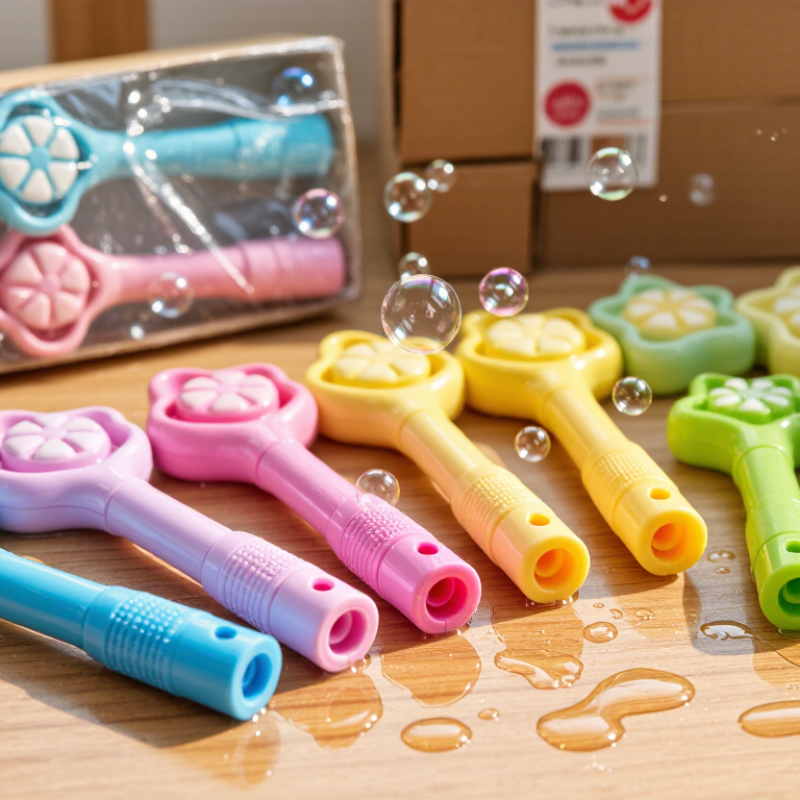
Define Your Wholesale Bubble Wand Needs and Target Buyers
Wholesale bubble wand planning starts with the buyer, not the product photo. List the sales channel, expected order volume, age range, and use setting. Party shops may need colorful, low-cost packs. Event suppliers often need larger quantities and consistent delivery. Toy retailers may prioritize durable handles, neat packaging, and clear age guidance. Write these needs before comparing shapes or prices. That simple step prevents attractive but unsuitable stock.
Then define the product brief. Specify wand size, handle comfort, pack count, color mix, and liquid requirements. If liquid is included, request ingredient details, leakage checks, and storage guidance. Ask for sample units before placing a full order. Test the cap, tube, seal, and bubble output by hand. A five-minute check can reveal weak joints or uneven airflow. Do not rely on photographs. Some displays look impressive, yet fail during busy outdoor events. Test samples carefully.
Your target buyers should shape the wholesale decision. For families, easy opening and manageable size matter. For party planners, fast setup and consistent performance matter more. Seasonal sellers may accept simpler designs, but they need reliable cartons and timely replenishment. Use past sales data when available, but question it. A previous best seller may have succeeded only because of its timing. Ideally, compare two sample groups with real customers. Feedback can be messy. Still, it exposes assumptions before they become excess inventory.
Check Supplier Reliability, Pricing, Minimum Orders, and Shipping
How to Choose the Best Bubble Wands for Wholesale?
Check Supplier Reliability, Pricing, Minimum Orders, and Shipping
Choosing wholesale bubble wands starts with supplier reliability, not colorful samples. In my sourcing checks, I request business details, production photos, and recent inspection records. A dependable supplier answers technical questions clearly and keeps specifications consistent. Ask for material information, wand dimensions, liquid compatibility, and packing methods. Request a paid sample before placing a large order. Test the handle, ring, seal, and bubble performance for several days. Test it repeatedly. Small defects often appear after repeated use. This step feels slow, but it prevents expensive surprises.
Compare landed cost, not only unit price. Ask whether quoted prices include packaging, labels, tooling, and export documentation. A low price can hide thin plastic or weak closures. Request tiered quotations for 500, 1,000, and 5,000 pieces. Check the minimum order quantity against your storage space and sales forecast. A high MOQ may create dead stock. Negotiate mixed-color orders when possible, but confirm related fees. Leave room for inspection and replacement costs. My own forecasts have been wrong before. Pricing decisions need evidence.
Shipping details deserve equal attention. Confirm production time, dispatch port, carton size, gross weight, and shipping terms in writing. Ask for carton-test or drop-test photos. A damaged outer carton can ruin clean retail presentation. Compare air, sea, and rail options according to urgency and order size. Confirm how the supplier handles delays, missing cartons, and damaged goods. Set an approval point before mass production. Keep records together. Save invoices, sample photos, and inspection reports in one file. Clear records support fair discussions, though they cannot remove every risk.
Select the Best Bubble Wands Through Sampling and Quality Testing
Choosing wholesale bubble wands should begin with sampling, not catalog photos. A practical sample should represent different colors, molds, and production batches. Test the wand’s grip, loop shape, cap fit, and liquid leakage. Rotate each loop through the solution repeatedly. A weak joint may look acceptable once, then crack after several uses.
Circana’s 2024 global toy industry report recorded a 7% sales decline in 2023 across major markets. That pressure makes returns more expensive. Quality testing should cover breakage, sharp edges, small detachable parts, and liquid contamination. Use an independent laboratory to check relevant requirements, such as ASTM F963-23 in the United States or EN 71 in Europe. Ask for test reports tied to the exact material and production batch. A copied certificate proves little. I have seen sampling plans fail because suppliers submitted perfect pre-production pieces, not random factory output. That mistake deserves more attention.
Tips: Order several samples from separate cartons. Measure wall thickness and handle weight. Check odor after opening and after storage. Test leakage upside down for 24 hours. Record defects with photos. ISO 2859-1 can guide acceptance sampling, but a buyer still needs clear defect limits. For example, zero tolerance may suit sharp fragments, while minor color variation may be acceptable. Do not judge only by the lowest unit price. A slightly cheaper wand can create higher replacement, inspection, and customer-service costs.
How to Choose the Best Bubble Wands for Wholesale?
Sampled bubble wands were evaluated across key quality indicators. A higher score indicates better performance in wholesale quality testing.
Testing focus: bubble output, leak resistance, material safety, durability, and packaging consistency. Products with strong results across all dimensions are generally more suitable for wholesale purchasing.


Share On: