

Blog

Signature Lawn and Landscape LLC

10 Best Surface Mounted Lights for Every Space

A Surface Mounted Light can solve a practical problem: adding useful illumination without cutting a deep recess into the ceiling. But the right fixture does more than brighten a room. Its beam should reach the worktop, hallway floor, or reading chair without creating harsh glare or awkward shadows. Size, mounting height, color temperature, color rendering, and dimming all affect the result. Small details matter.

The U.S. Department of Energy’s 2022 lighting forecast estimated that solid-state lighting could save about 569 terawatt-hours of electricity annually by 2035, compared with a baseline without LEDs. That projection reflects broad efficiency potential, not a promise that every fixture will perform equally well. In practice, poor placement or an unsuitable beam can undermine even an efficient light. Look closely.

Architect Le Corbusier wrote, “Architecture is the learned game, correct and magnificent, of forms assembled in the light.” His words capture why fixture choice belongs in a room’s design, not just its electrical plan. This guide compares ten surface-mounted options for spaces ranging from compact bathrooms to open living areas. We consider specifications, likely use, installation constraints, and visual character, while recognizing that product performance can vary by model and room. A limitation remains: photographs and published specifications cannot fully show glare in your own space. Use the shortlist as a starting point, then check dimensions and lighting needs before buying.
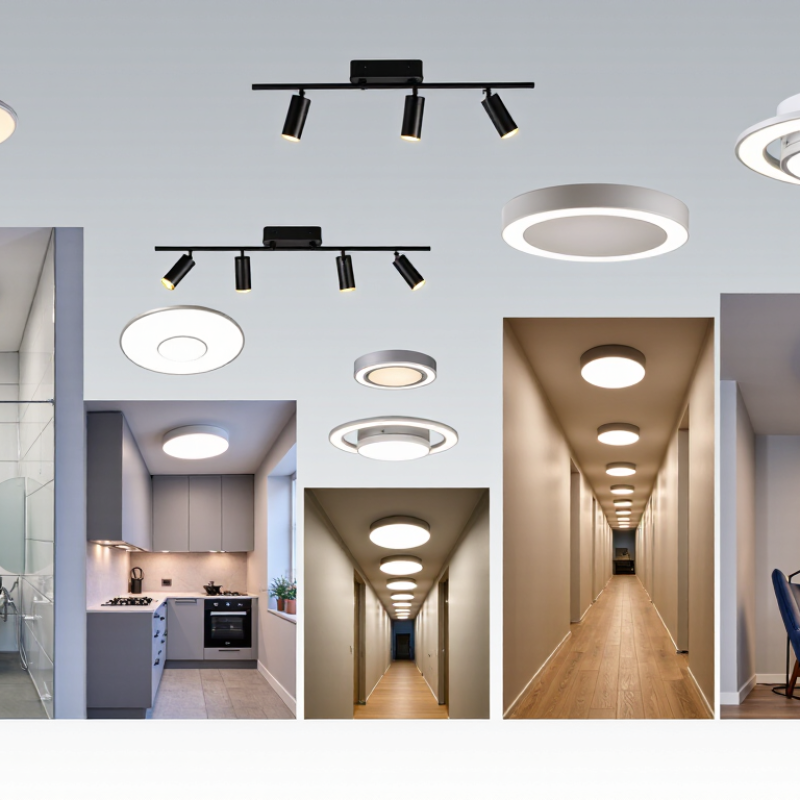
10 Best Surface Mounted Lights for Every Space

What Surface-Mounted Lights Are and How They Work

Surface-mounted lights attach directly to a ceiling or wall, rather than sitting inside a recessed cavity. Their base covers the electrical box, while the shade or diffuser remains visible. No ceiling void is needed. This makes them useful in rooms with concrete ceilings, shallow joists, or limited renovation access. A low-profile fixture can also preserve headroom in a hallway.

Inside, wires connect the fixture to the building’s electrical supply. Many modern models use LEDs and a driver to regulate power. The diffuser spreads light across the room, while the housing helps direct or soften it. Some designs cast light downward; others send a gentle glow toward the ceiling. The shape matters. A small, opaque shade may create a bright spot beneath it and leave corners dim.

When choosing a surface-mounted light, consider ceiling height, room size, and the task at hand. A kitchen work area needs clearer, more focused illumination than a bedroom corner. Check the fixture’s dimensions and light output, not just its appearance. In practice, even spacing often helps, but a perfectly even layout can feel flat. One overlooked detail is glare: a bare bulb near eye level may be uncomfortable. For hardwired installation, use a qualified electrician, especially if the wiring or mounting surface is unfamiliar.

How to Choose the Right Light for Each Space

Choosing a surface-mounted light starts with the room’s job, not the fixture’s appearance. In a kitchen, place bright, even light over counters and the sink, where shadows can hide spills or knife edges. A flush fitting helps in low-ceiling spaces, but it cannot replace focused task lighting. In a bedroom, softer, dimmable light makes evening routines more comfortable. Check the fixture’s light output and colour temperature, not just its size.

For bathrooms, choose a fitting rated for its intended damp location, and keep face-level lighting in mind. A single ceiling light can cast unhelpful shadows under the eyes. Hallways need consistent illumination without glare; a smaller fixture repeated along the route may work better than one bright point. IES guidance in the Lighting Handbook treats illuminance as task-dependent, so a reading corner and a passageway should not be planned alike. Exact needs vary.

Efficiency matters, too. The U.S. Department of Energy reports that LEDs use at least 75% less energy and last up to 25 times longer than incandescent lighting. Choose an LED surface fixture with suitable output and a compatible dimmer. I still find it easy to over-light compact rooms. A practical check: stand where you read, cook, or get dressed, then notice where shadows fall before deciding.

10 Best Surface Mounted Lights for Every Space - How to Choose the Right Light for Each Space

Light Type Best Space Typical Light Output Suggested Color Temperature Key Benefits What to Check
Low-Profile Flush Mount Bedrooms, hallways, and rooms with low ceilings 800–2,000 lumens 2700–3000 K for a warm, relaxed feel Sits close to the ceiling and spreads light broadly; a practical choice where headroom is limited. Choose a diffuser that reduces glare, and check that the fixture is appropriately sized for the room.
Semi-Flush Mount Entryways, dining areas, and bedrooms with standard-height ceilings 1,000–2,500 lumens 2700–3000 K for welcoming spaces Hangs slightly below the ceiling, adding visual interest while directing some light upward. Confirm the fixture’s drop leaves comfortable clearance, especially in walkways.
Surface-Mounted LED Disk Closets, utility rooms, hallways, and shallow ceiling boxes 600–1,600 lumens 3000–4000 K, depending on the desired atmosphere Thin profile suits locations where a recessed fixture cannot be installed; many models offer even illumination. Check mounting compatibility, dimmer compatibility, and whether the light source can be replaced.
Adjustable Gimbal Light Home offices, kitchens, galleries, and rooms needing accent lighting 500–1,200 lumens per fixture 3000–3500 K for balanced task and accent lighting Aimable heads can direct light toward work surfaces, artwork, or other focal points. Use a wide enough beam for general lighting; narrow beams can create bright spots and shadows.
Surface-Mounted Cylinder Entries, kitchen islands, corridors, and contemporary living spaces 700–1,800 lumens per fixture 2700–3000 K for living areas; 3000–4000 K for work areas A compact directional form can provide focused or downlight illumination without a recessed housing. Review beam angle and glare control, and use multiple fixtures when one cylinder cannot light the area evenly.
Linear LED Surface Fixture Kitchens, laundry rooms, garages, and long work areas 2,000–6,000 lumens per fixture 3000–4000 K for clear, comfortable task lighting Distributes light along a longer area and can reduce dark patches over counters or benches. Match fixture length and output to the space; consider a diffuser to soften direct glare.
Wraparound Ceiling Light Garages, workshops, laundry rooms, and utility spaces 2,000–5,000 lumens per fixture 3500–5000 K for detailed work and utility areas A broad lens helps spread light across the room and shields the light source from direct view. Check ceiling clearance, light distribution, and whether the fixture is rated for the installation environment.
Moisture-Rated Surface Fixture Bathrooms, covered porches, and other damp locations 800–2,500 lumens 2700–3500 K for a comfortable, useful light level Designed for locations where moisture may be present, when the fixture carries the appropriate rating. Match the fixture’s damp- or wet-location rating to the actual exposure and follow local electrical requirements.
Vapor-Tight Enclosed Fixture Garages, workshops, basements, and dusty or humid service areas 2,000–6,000 lumens per fixture 3500–5000 K for practical visibility A sealed enclosure can help protect the light source from dust and moisture when correctly rated. Verify the environmental rating, mounting method, and suitability for the specific temperature and exposure conditions.
Surface-Mounted Track System Living rooms, studios, retail-style displays, and flexible workspaces 500–1,200 lumens per head 2700–3500 K for residential settings; higher temperatures for task-focused areas Movable heads can be repositioned to highlight different areas or objects as needs change. Plan head placement to avoid glare and shadows, and ensure the track system is installed with compatible components.

Selection note: Light-output figures are typical planning ranges, not guarantees; actual output varies by fixture. As a starting point, general room lighting often uses about 10–20 lumens per square foot, with additional task lighting where needed. Check the product’s ratings, dimensions, and installation instructions before purchase.

10 Best Surface-Mounted Lights for Different Rooms

A compact flush mount suits an entryway, where a clear path matters more than a dramatic fixture. In a hallway, choose a low-profile light that will not crowd door swings or feel imposing overhead. Kitchens benefit from bright, even surface-mounted lighting, especially above counters where shadows can hide small details. For a dining room, a dimmable fixture makes the table usable for meals and quieter evenings. Living rooms often feel better with a broad, diffused light that supports lamps rather than replacing them. One light rarely does everything.

In a bedroom, warm-toned, dimmable lighting can make the room feel calmer before sleep. Bathrooms need fixtures rated for the moisture level and placement; check the product instructions before buying. A laundry room calls for practical, bright light that helps reveal stains and stray socks. Closets work well with shallow fixtures that spread light across shelves instead of leaving dark corners. In a home office, a surface-mounted fixture with controlled glare can illuminate the desk without reflecting sharply in a screen.

Room size, ceiling height, and existing wiring all affect the right choice. Measure before shopping. A fixture that looks modest in a showroom may dominate a small bedroom ceiling. It is easy to focus only on brightness, but color temperature and diffusion matter too. Even then, the result may feel slightly different at home. That is worth checking before installation.

Key Features to Compare Before Buying

A good surface-mounted light should fit the room, not just look attractive in a product photo. Compare brightness in lumens, then consider how the light spreads across the floor and walls. A compact fixture can leave dark corners in a long hallway. Too much output may feel harsh over a small dining table. Measure the ceiling height and available mounting space before choosing. Check the fixture’s diameter and depth, especially where doors, cabinets, or shelving sit nearby. Small details matter.

Color temperature affects the mood. Warm white often feels comfortable in bedrooms, while cooler light can help kitchens feel crisp. Check the color rendering index if accurate colors matter for dressing or food preparation. Look for dimming support, and confirm that the fixture works with the dimmer you plan to use. Not every combination does. In bathrooms or covered outdoor areas, verify the fixture’s damp- or wet-location rating against the actual conditions. Also compare energy use, replaceable light sources, and cleaning access. Dust gathers along shallow edges. It is easy to focus on style and overlook maintenance; I would not assume a flush-looking design is automatically simple to clean.

10 Best Surface-Mounted Lights for Every Space: Key Features to Compare Before Buying

Compare the typical illuminance planning ranges for ten common spaces. These broad residential targets are measured in foot-candles (fc); the right level depends on the task, room finishes, and local guidance. Check a fixture’s lumen output, dimming options, and light distribution to see whether it suits your space.

Installation and Maintenance for Safe, Lasting Use

Surface-mounted lights can brighten hallways, kitchens, and low-ceiling rooms without a bulky pendant. Safe installation starts with the ceiling box: it must support the fixture’s weight, not just its wires. Turn off the circuit breaker and verify the power is off before handling connections. Match the fixture to the room’s conditions; bathrooms and covered outdoor areas may need damp-rated models. If wiring is unfamiliar or the box feels loose, pause and call a qualified electrician. A rushed fit is not worth the risk.

Tips: Lay out the screws and parts before climbing the ladder. Use a stable ladder on a dry, level floor, and keep one hand free to steady the fixture. Check that wires are tucked inside the canopy without being pinched. The cover should sit flush against the ceiling. If it tilts, something may be misaligned.

For maintenance, switch off power and let the lamp cool before cleaning. Wipe dust from the diffuser and housing with a soft, dry cloth; avoid spraying cleaner into openings. Every few months, look for loose screws, yellowing, cracks, or flickering. These clues can signal heat or a poor connection. I’ve found that dust often hides small problems, though cleaning alone cannot fix them. Have persistent flickering or a warm, discolored fixture checked by an electrician.