10 Best Landscaping and Maintenance Tips for a Beautiful Garden?
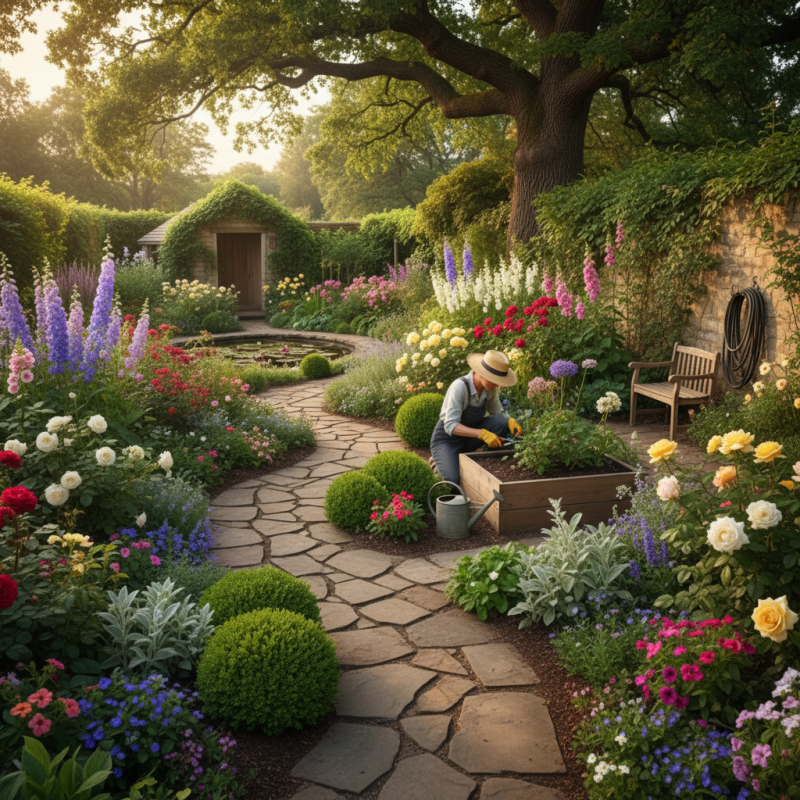
Creating a beautiful garden requires thoughtful landscaping and maintenance. Successful gardening is more than just planting flowers or shrubs. It involves careful planning and ongoing efforts to keep your space vibrant.
Landscaping and maintenance go hand in hand. You must consider the layout, plant selection, and soil health. Neglect can lead to overgrown weeds or dying plants. Many gardeners struggle with these challenges. Common mistakes include not assessing sunlight or water needs.
To achieve the garden of your dreams, attention to detail is crucial. Regular upkeep keeps plants healthy and thriving. Remember, a beautiful garden is a reflection of your care and commitment. Each step taken can lead to a more inviting outdoor space. Celebrate your successes, but learn from your setbacks too.
Essential Soil Preparation Techniques for Healthy Plant Growth
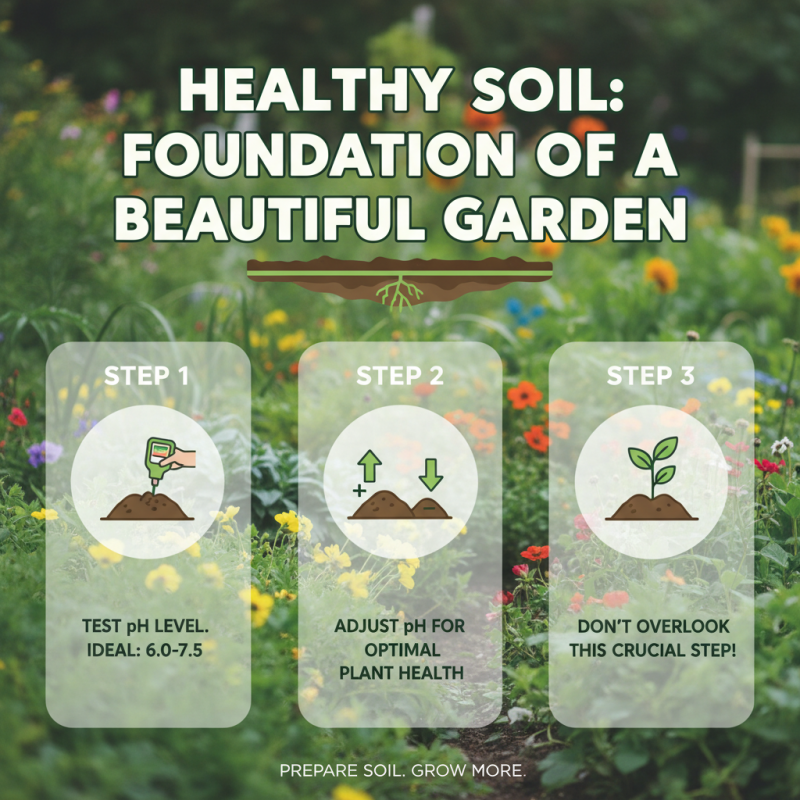
Healthy soil is the foundation of a beautiful garden. Before planting, it’s vital to prepare the soil properly. Start by testing the pH level. Ideal soil ranges from 6.0 to 7.5. Adjusting pH can greatly improve plant health. It may sound simple, but many overlook this step.
Next, consider soil texture. Loamy soil, which is rich in organic matter, holds moisture without becoming waterlogged. You can achieve this by adding compost. Mix in well-rotted manure or leaf mold. These additives enrich the soil. However, too much can lead to nutrient imbalances. Monitor your soil’s response carefully.
Drainage is equally important. Compacted soil can suffocate roots. To enhance drainage, aerate the soil regularly. Use a garden fork to poke holes. This helps improve air circulation. Observe your plants closely; yellowing leaves may indicate poor drainage. Adjust your approach if necessary. Small changes can yield significant improvements in plant growth.
Choosing the Right Plants for Your Climate and Garden Style
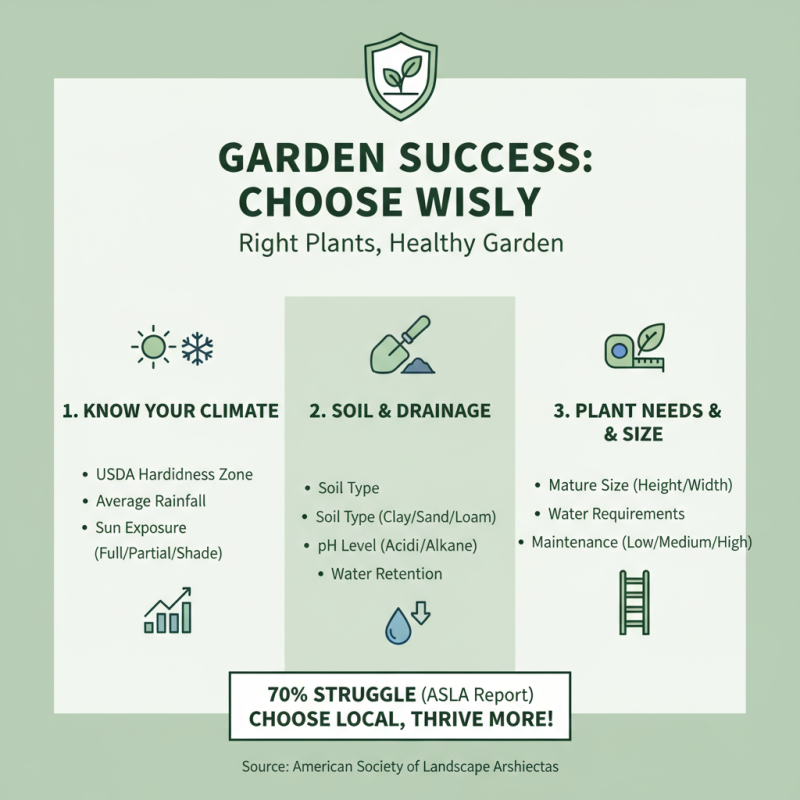
Choosing the right plants for your garden is crucial. It directly impacts not only aesthetics but also plant health. According to a report from the American Society of Landscape Architects, over 70% of homeowners struggle with selecting plants suitable for their local climate. This leads to issues like poor growth and increased maintenance costs.
Different regions have unique climate patterns. For instance, arid areas need drought-resistant species while tropical zones thrive with lush, moisture-loving plants. Local gardening centers often provide insights, but many still overlook this vital step. Many gardeners buy based on appearance rather than suitability. This can lead to an unbalanced landscape filled with plants that fail to flourish.
Soil type also plays a significant role. Using plants that adapt well to your soil conditions is essential. Research indicates that native plants typically perform better, as they are adapted to local soil and climate. Yet, many gardeners might hesitate to embrace native options, preferring exotic varieties. This choice may result in disappointing outcomes. Reflecting on these decisions can help reframe our gardening approach.
Effective Watering Strategies for Optimal Plant Health
Watering is crucial for maintaining plant health. Proper strategies can make a significant difference. According to a report from the American Society of Landscape Architects, overwatering is one of the most common mistakes gardeners make. It can lead to root rot and other diseases. A simple rule: plants need about an inch of water weekly.
A drip irrigation system can be beneficial. It delivers water directly to the roots, minimizing waste. This method can reduce water usage by up to 50%, as per the Environmental Protection Agency (EPA). However, many homeowners tend to set their systems on a timer, often forgetting the specific needs of their plants. Soil moisture sensors can help, providing real-time data to ensure proper hydration.
Timing is critical as well. Watering early in the morning or late in the afternoon reduces evaporation rates. This is especially important in warmer climates. Yet, many still water during the heat of the day, losing valuable water. Understanding your garden's unique needs can prevent these common pitfalls. Regularly check your plants and adjust watering as necessary to promote vibrant growth.
Effective Watering Strategies for Optimal Plant Health
Seasonal Maintenance Tasks to Keep Your Garden Thriving
Seasonal maintenance is crucial for a thriving garden. Each season brings different tasks that are essential to keep your plants healthy.
In spring, it’s time for pruning. Remove dead branches and encourage new growth. This simple task promotes blooming and ensures your shrubs are tidy.
Soil testing should also occur now. Check pH levels to understand what nutrients your plants need.
As summer arrives, hydration becomes vital. Regular watering is necessary, but avoid saturating the soil. Observe your garden’s needs—some plants may require more attention.
Mulching helps retain moisture and suppress weeds, but it needs to be refreshed periodically.
Fall is about preparing for the winter. Clean up fallen leaves to prevent diseases. This task seems tedious but is essential.
Consider planting bulbs for a vibrant spring display.
In winter, maintain your tools and reflect on your garden's performance. Some plants didn’t thrive this year.
Maybe they need a new location or better care. Each season offers a chance to learn and grow as a gardener.
Best Practices for Mulching and Weed Control in Landscaping
Mulching is crucial for any garden. It serves various functions. First, it helps retain moisture in the soil. This is especially important during dry spells. Additionally, mulch suppresses weed growth, which can compete with your plants. Organic options like bark, straw, or grass clippings not only provide benefits but also improve the soil as they decompose.
Weed control is another essential practice. Regular inspection of your garden beds can help detect budding weeds. Pulling them up by hand is effective, but it is labor-intensive. Synthetic weed barriers can be effective too, though they may not be eco-friendly. Always consider the materials you use. You may find that some techniques work better than others based on your garden’s specific conditions. Gardening is about experimentation. Don't be afraid to try new things, and learn from both successes and failures.




Share On: