

Blog

Signature Lawn and Landscape LLC

Where to Buy the Best Giant Lanterns in China?

Choosing where to buy giant lanterns in China is not just a price comparison. The right supplier should show how its lanterns are designed, built, tested, and packed for transport. A glowing dragon may look striking in a photograph, but buyers also need clear details about its frame, fabric, lighting, dimensions, and outdoor performance.

For a transparent editorial voice, this guide uses Lin Wei as a fictional composite of experienced lantern-industry professionals, not as a verifiable source. The guiding principle is: “A good lantern should look convincing in daylight, glow evenly at night, and arrive ready for careful installation.” It is a practical standard, though real projects may reveal trade-offs between detail, weight, budget, and shipping time.

China has established lantern-making hubs and suppliers with different strengths. Some focus on large festival displays; others specialize in custom shapes, illuminated figures, or smaller decorative pieces. Ask for recent project photos, material specifications, production timelines, and a written packing plan. Where possible, review a sample or request close-up images of seams, joints, and lighting components. These details matter. A beautiful rendering alone cannot confirm consistent workmanship. This guide explores what to compare, which questions to ask, and how to assess suppliers before placing an order—while recognizing that even careful checks cannot remove every project risk.
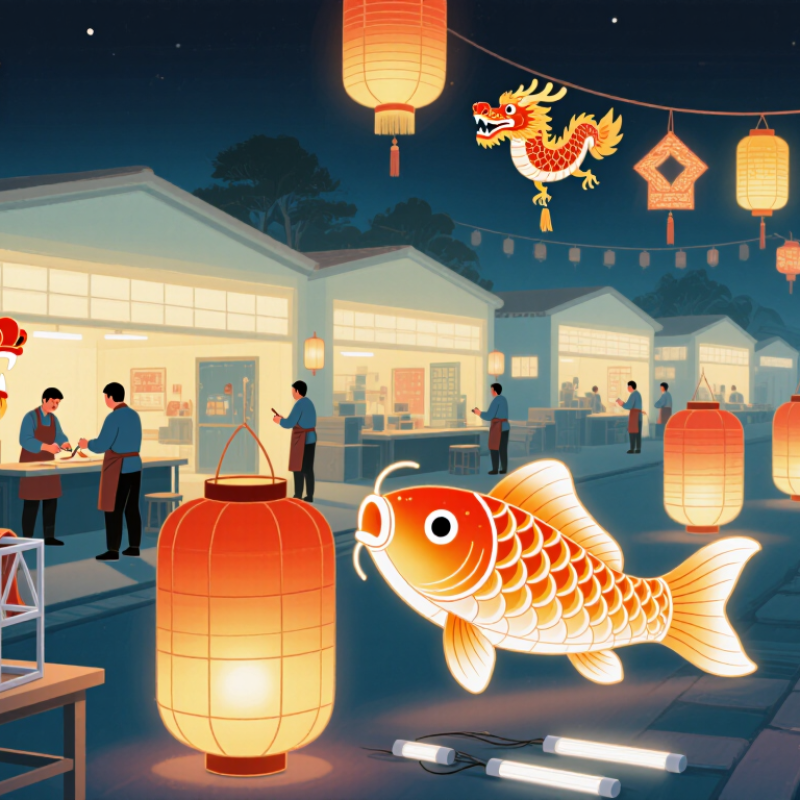
Where to Buy the Best Giant Lanterns in China?

What Giant Lanterns Are and How They Are Made

Giant lanterns are large illuminated sculptures made for festivals, public displays, and seasonal celebrations. They may depict animals, flowers, famous stories, or imaginative scenes. Unlike a simple hanging lantern, a giant design often has a shaped frame and many fitted surface panels. Some stand several meters tall.

The making begins with a drawing and a sturdy frame, commonly built from bamboo or lightweight metal. Makers bend and join the ribs, checking the proportions before covering them with colored fabric, silk, or paper. The covering is cut into sections and attached by hand. Details such as scales, petals, and facial features are painted or stitched onto the surface. Lighting is usually placed inside, with LEDs often chosen because they produce less heat. Careful wiring matters.

Weather can change the plan. Outdoor lanterns need suitable materials, secure supports, and protected electrical parts. A beautiful finish may still wrinkle or fade after rain; that is easy to underestimate. When comparing lanterns in China, ask how the frame is assembled, what covering is used, and whether the piece is intended for indoor or outdoor display. A workshop’s clear answers and construction photos offer more useful evidence than size alone.

China’s Main Giant Lantern Production Regions

Zigong, Sichuan, is the best-known starting point for giant chinese lanterns. The city has a long lantern-making tradition and a concentrated network of designers, metalworkers, and fabricators. Buyers can discuss custom themes, frame sizes, surface materials, and lighting plans directly with workshops. Ask for recent project photos and construction drawings. Details matter.

Guangdong is another useful region to explore, especially for suppliers connected to its broad lighting and fabrication industries. Some workshops focus on illuminated structures rather than traditional festival lanterns, so confirm their experience with oversized outdoor displays. Production labels can blur: a supplier may design in one city and assemble elsewhere. That is worth checking. Request the frame material, installation method, packing dimensions, and a clear schedule before placing an order. A low quote may omit transport or on-site assembly, and comparing itemized estimates can reveal the difference. If possible, review a small material sample; photographs do not always show how fabric color changes under LEDs.

China’s Main Giant Lantern Production Regions

This chart compares the approximate latitude of Zigong, Nanjing, and Beijing, cities associated with major lantern-making traditions. Latitude indicates geographic location, not production volume.

Types of Giant Lanterns Available for Purchase

Giant lanterns sold in China usually fall into several practical types. Fabric-covered frame lanterns create glowing animals, flowers, or festival scenes. Their steel or aluminum skeletons support shaped panels of silk-like fabric. Sculptural lanterns use layered forms and painted details for close viewing. Walk-through arches and landscape installations suit large public spaces, but need careful site measurements.

Modular lantern sets break into sections for transport and storage. They work well for touring displays, though joints can show if assembly is rushed. One detail is easy to miss. Ask suppliers for frame drawings, fabric samples, packing dimensions, and outdoor-use specifications before ordering. A bright rendering cannot confirm sturdy welds or weather-resistant wiring.

Lighting also affects operating costs. The U.S. Department of Energy’s Energy Saver guidance reports that LEDs use up to 90% less energy and last up to 25 times longer than incandescent bulbs. That makes LED-lit lanterns a sensible option for long-running displays. Still, the prettiest mock-up is not always the strongest build. Request photographs of completed installations and confirm who handles repairs, replacement panels, and on-site assembly.

How to Compare Manufacturers and Product Quality

When comparing giant-lantern manufacturers in China, request a dimensioned drawing, materials list, and current workshop photos. Compare frame material and tube-wall thickness, not just height or price. Ask how joints are welded and seams reinforced. Small details matter. A sample helps, but it may not match a rushed production batch.

The U.S. Department of Energy’s LED lighting guidance reports that LEDs use at least 75% less energy than incandescent lighting and can last up to 25 times longer. These figures concern lighting, not lantern structures, but they make driver quality, heat control, and replaceable modules worth checking. Ask for measured power figures and electrical-safety test reports. Make sure each report identifies the model being quoted.

For outdoor displays, request the test report supporting any claimed water-resistance rating; the rating alone is not proof. Check that the tested product matches the full assembly, including connectors and lighting components. Ask for fabric colorfastness results and a written inspection checklist. I would also compare lead times against the manufacturer’s stated production capacity. That part is easy to overlook.

Where to Buy and How to Arrange Shipping

For large decorative lanterns, buyers often contact specialist workshops in Zigong, Sichuan, where lantern-making has a long history. You can also compare suppliers through Chinese wholesale platforms or regional trade fairs. Ask for recent project photos, exact measurements, frame and covering materials, and a written quote. A photo can hide a lot. Request a short video showing the lantern from several angles, especially if the design includes moving parts or delicate details. Confirm whether the price includes lighting, wiring, assembly instructions, and spare components.

Shipping needs planning before you place the order. A giant lantern may travel disassembled in several reinforced crates, so ask for packed dimensions and total weight—not just the finished size. Sea freight is often practical for bulky pieces, while air freight may suit smaller, time-sensitive orders. Compare delivery terms, insurance, and who handles export documents and destination charges. Check import, electrical, and fire-safety requirements with your local authorities before production. Rules differ by destination.

Get the delivery address, installation access, and unloading equipment confirmed early. A crate can arrive safely yet still be too large for a doorway or lift. Ask the supplier to label parts clearly and include assembly diagrams. I would also keep a small buffer in the schedule; custom work can run late. That is worth admitting. Request a pre-shipment inspection or detailed packing photos, then approve the final balance only after checking the agreed specifications.

Where to Buy the Best Giant Lanterns in China? – Where to Buy and How to Arrange Shipping
Buying route Where to look Best suited for What to verify before ordering Shipping arrangement
Direct from a specialist lantern maker Zigong, Sichuan, a city widely known for its lantern-making tradition and lantern festivals. Custom-made, oversized lanterns; themed displays; projects requiring made-to-order shapes or structures. Request drawings, finished and packed dimensions, frame and fabric specifications, lighting details, outdoor-use requirements, production schedule, and photos or videos of comparable work. For large packed pieces, request a freight quote based on packed dimensions and gross weight. Confirm whether the supplier can crate the lanterns and deliver them to a port or freight forwarder.
Business-to-business sourcing platforms Search China-based wholesale and export marketplaces using terms such as “custom giant lantern” and “festival lantern installation.” Comparing multiple suppliers, requesting quotations, and sourcing standard designs or custom orders remotely. Check the supplier’s manufacturing role, customization capability, recent project evidence, payment terms, sample or prototype process, and who is responsible for export packing. Ask for separate product and freight quotations. Confirm the shipping term, named delivery point, cargo dimensions, insurance arrangements, and who handles export customs procedures.
Event-display or festival project contractor Lantern display contractors that design, produce, and install festival or public-event displays in China. Multi-piece installations, site-specific designs, and projects that need design coordination or installation planning. Clarify whether the quotation includes design, fabrication, lighting, installation, dismantling, and on-site services. Confirm local permits and site requirements separately. Ask whether the contractor arranges delivery to the venue or only to a Chinese warehouse or port. For overseas projects, confirm who coordinates international freight and destination-side installation.
Local sourcing agent or procurement service A China-based agent familiar with the product category and able to communicate with manufacturers and freight forwarders. Buyers who need supplier checks, factory communication, order consolidation, or help coordinating export logistics. Agree on the agent’s scope and fees in writing. Specify inspection criteria, approval requirements before shipment, handling of defects, and responsibility for supplier payments. Request a written shipping plan showing collection, packing, consolidation, export clearance, freight, insurance, and destination charges as separate items.
Samples or small lantern components Order a sample or selected components from the chosen maker before approving a full-size production run. Checking color, fabric, finish, lighting effect, and workmanship before committing to a large order. Confirm that the sample uses the same materials, lighting system, and finish as the proposed production order. Get written approval for any differences. Courier or air freight may be practical for small samples. Compare the packed size and weight before choosing; full-size lanterns may be unsuitable for parcel services.